
 日本語 - 日本
 한국어 - 대한민국

Artificial intelligence has well and truly arrived in the machine shop. It can suggest tooling, help generate toolpaths, answer software questions, support estimating, read documentation, and automate parts
of the CAM programming process. And, in some environments, it can even produce basic G-code
from a prompt.
That has naturally led to a question many manufacturers, machinists, and programmers are now asking: Will AI replace CNC programmers?
The honest answer to that question is more nuanced than a mere yes or no.
AI will certainly change CNC programming because it already is, but actively replacing skilled CNC programmers entirely is a far more complex challenge than the industry headlines and online fearmongering suggest.
CNC programming is not just the act of creating code - it is the practice of turning design intent into a controlled, repeatable, machine-ready manufacturing process.
AI can generate a recommendation, but a CNC programmer has to know whether that recommendation can be trusted on a real machine.
That distinction is the future of NC programming.
The question is not simply whether AI can create toolpaths or write G-code. The real question is whether manufacturers can use AI to move faster while still protecting machines, parts, people, and production schedules.
The most likely future is not “Let’s employ AI instead of CNC programmers.” It is AI-assisted programming led by skilled people, and supported by stronger simulation, verification, and process control techniques.
What does a CNC programmer actually do?
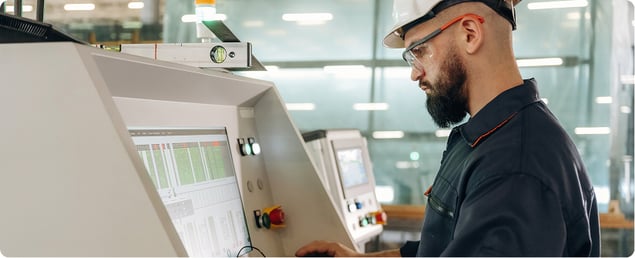
To understand whether AI can, or could ever, truly replace CNC programmers, it is worth examining what the job actually entails.
A CNC programmer creates the instructions that guide a CNC machine through the manufacturing process. Those instructions may be created manually, generated through CAM software, processed through a post-processor, edited at the machine, or refined after simulation and prove-out.
In a modern manufacturing environment, the CNC programmer’s role often includes reviewing CAD models and drawings, understanding tolerances, choosing machining strategies, selecting tools and holders, planning setups, managing work offsets, creating CAM toolpaths, generating G-code, checking machine motion, supporting prove-outs, and troubleshooting when the real process does not behave exactly as planned.
That last point is important. CNC programming lives in the space between digital planning and physical manufacturing.
It is one thing to create a toolpath on screen. It is another matter to know how that toolpath will behave once it is post-processed, interpreted by a controller, and executed by a specific machine with a specific setup, fixture, and assembly.
This is why experienced CNC programmers are so valuable. They understand not only how to produce code, but how to make the process work reliably in the real world.
How AI is already changing CNC programming.
AI is already influencing AI CNC programming, though not always in the dramatic, Terminator-esque way people imagine. Much of the real progress is happening inside CAM software, quoting tools, shop-floor analytics, documentation systems, and workflow assistants.
AI CAM software can help recognize features, suggest operations and generate first-pass toolpaths for common machining tasks.
Automated CNC programming tools can apply rules and templates to reduce repetitive programming effort, particularly when shops produce similar part families.
AI assistants can help users find commands, understand software workflows and get faster answers to “How do I?” questions without searching through manuals.
These advances matter because they remove friction. CNC programming often involves a large amount of repeated decision-making: selecting familiar strategies, applying proven approaches, reusing known tooling and navigating complex software environments.
AI can reduce the time programmers spend on some of those tasks, allowing them to focus more attention on process decisions that require acute human judgment.
There is also a growing role for AI and advanced algorithms in toolpath optimization, feed-rate improvement, tool-life analysis, production planning, and machine monitoring.
These are not replacements for CNC programmers, but they can make programming and manufacturing teams faster, more consistent, and better informed.
For a broader look at this topic, see our article on AI in CNC machining.
Can AI write G-code?
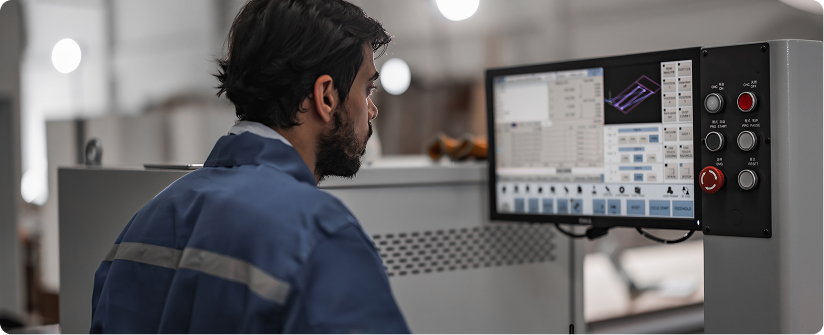
A large language model can generate simple G-code examples. It may produce a basic drilling cycle, milling routine, or sample program that looks reasonable in a controlled demonstration. For education, training and experimentation, that can be useful.
Production CNC programming is very different.
Machine-ready G-code must be correct for the specific machine, controller, post-processor, setup, tooling, stock, fixture, work offset, material, tolerance requirements, and shop-floor process.
It has to account for how the machine will actually move, how the controller will interpret the code, and what physical objects are present in the machining environment.
The danger, then, is not that AI cannot write code - the danger is that it can write code that looks plausible.
Plausible G-code can still be wrong. It can still exceed travel limits, ignore a fixture, use the wrong assumption about tool length, mishandle a canned cycle or create motion that is technically valid but completely unsuitable for the machine that will run it.
So the better question is not “Can AI write G-code?” It is “Can AI produce verified, machine-specific NC code that can be repeatedly trusted on the shop floor?”
For the time being at least, the answer to that question is no.
Can AI generate CNC toolpaths
AI can generate CNC toolpaths, and this is an area where manufacturers are actually likely to see the technology as a friend, not foe, as it unlocks meaningful productivity gains.
AI-generated toolpaths can be useful when geometry is familiar, machining strategies are repeatable, and the required operations are well understood.
For example, AI-assisted CAM tools may help identify holes, pockets, bosses or planar faces, then suggest appropriate drilling, roughing, or finishing operations.
In environments with standardized tooling and mature process rules, this can save significant programming time.
However, toolpath generation is still only one part of the manufacturing workflow.
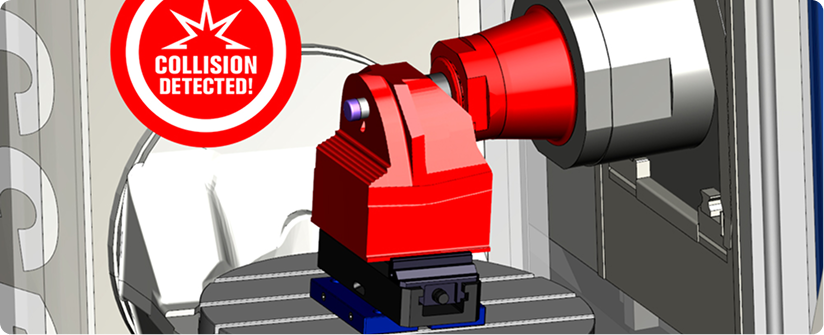
A toolpath that looks right in CAM still needs to be converted into machine-specific NC code. That output still needs to be post-processed, checked against the actual machine configuration, and reviewed for collisions, over-travel, holder interference, fixture clashes and setup constraints.
This is where many general discussions of AI in CNC programming become too shallow. They focus heavily on whether AI can generate a toolpath, but they often say much less about whether that toolpath can be safely and confidently released to production.
Where AI currently falls short in CNC programming.
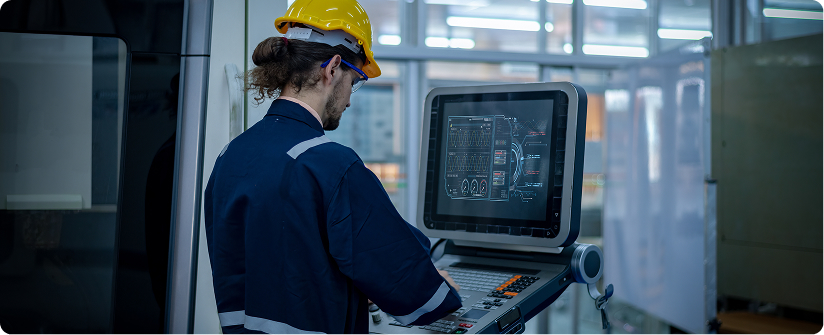
AI is undoubtedly powerful and useful, but CNC programming quickly exposes its current limitations. Why? Because manufacturing is not purely digital. It is physical, contextual, and accountable.
The first limitation is the shop floor context. A skilled CNC programmer may know that one machine behaves differently from another, that a specific fixture has been modified, that a toolholder creates clearance concerns, or that a particular material batch is difficult to machine, or that a customer cares most about one critical surface.
Much of that knowledge is not written down in a form AI can easily use. It lives in people, proven processes, shop standards, and experience.
The second limitation is data quality. AI performs best when it has access to reliable, relevant, and well-structured data - ideally in plentiful quantities.
Many manufacturing environments simply don’t have this to offer. They aren’t equipped with perfectly organized records of every toolpath, setup, inspection result, tool-life outcome, machine issue, and production adjustment.
Even when good data exists, it may not transfer cleanly from one machine, material, or shop to another.
The third limitation is judgment. AI can optimize for a stated objective, but CNC programming often involves competing priorities.
The fastest toolpath may not be the best toolpath. The most aggressive cutting strategy may save time but create unacceptable tool wear, heat, or vibration. A conservative process may be slower but more appropriate for a high-value part or an unattended machining environment.
Those trade-offs require human thinking and manufacturing judgment.
The fourth limitation is accountability. If a program causes scrap, damages a fixture, or crashes a machine, the responsibility does not belong to an algorithm. It belongs to the people and processes that released the program.
That is why human oversight in CNC programming is not just a preference - it is a fundamental requirement. AI can support decision-making, but it does not eliminate the need for a qualified person to approve the result.
What skills will CNC programmers need in the future?
CNC programming remains a strong and vital career path, but the skills that matter are changing.
Machining fundamentals will still come first. AI-assisted CAM tools are only useful if the person reviewing the output understands cutting tools, materials, feeds and speeds, tolerances, and machine limits.
Without that foundation, it is difficult to know whether an AI-generated suggestion is sensible or unsafe.
CAD/CAM skills will also remain essential. AI will likely become part of CAM software rather than replace it entirely, so programmers still need to understand how toolpaths are built, what parameters matter, and how strategy choices affect machining outcomes.
G-code literacy will continue to matter, too. Even if fewer programmers write every line by hand, they still need to understand what the code is asking the machine to do. That knowledge is critical for troubleshooting, editing, reviewing post-processed output, and communicating with operators.
Post-processing awareness will also become more important. With AI assistance, programmers do not necessarily need to become post developers, but they should understand that CAM output changes when it is converted to machine-specific NC code. The post-processor is a critical link between digital intent and machine behavior.
Finally, CNC simulation, verification, and optimization software proficiency will become core future skills. As more programming work is automated, manufacturers will need people who can validate output, identify risk, improve machining performance, and release programs with confidence.
The programmer of the future will not simply know how to use AI tools - they’ll know how to challenge and control them.
The modern CNC workflow: AI-assisted, human-led, verification-driven.
The most effective future workflow will combine AI’s speed and agility, with human judgment, engineering ingenuity, and independent verification.
A programmer or manufacturing engineer will still define the manufacturing goal. AI can help generate first-pass operations, suggest toolpaths, or accelerate CAM programming. The programmer will then review that output and decide whether the strategy makes sense.
After that, CAM output will be post-processed into machine-specific NC code. That code must then be simulated and verified against the machine, setup, stock, tools, and fixtures. If optimization is required, the program can be improved for cycle time, tool life, force control, or machining efficiency.
Only after that process will the program be ready for production.
This is not a future without CNC programmers. It is a future where programmers are supported and protected by better tools.
So, will AI replace CNC programmers?
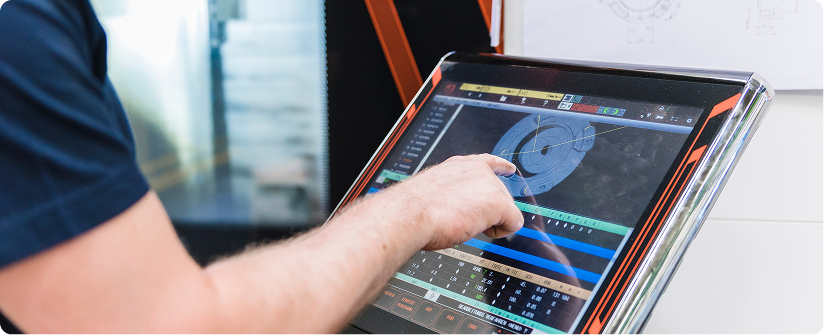
As established, AI can already replace some CNC programming tasks, and its capabilities are likely to expand in the future.
At the time of writing this article, AI is already helping shops automate simple toolpath generation, answer software questions, support first-pass CAM programming, and reduce repetitive work.
But it’s crucial to remember that AI is a tool. It is not a workforce replacement.
CNC manufacturing still depends on real machines, real tools, real fixtures, real materials, real tolerances, real delivery commitments, and real costs when something goes wrong.
That is why the future of CNC programming will not belong to AI alone, but to manufacturers that combine AI-assisted programming with skilled human oversight, accurate post-processing, independent G-code simulation, and proven CNC verification.
The job of CNC programming is changing, but the value of human expertise is not disappearing. If anything, it’s just moving higher in the workflow.