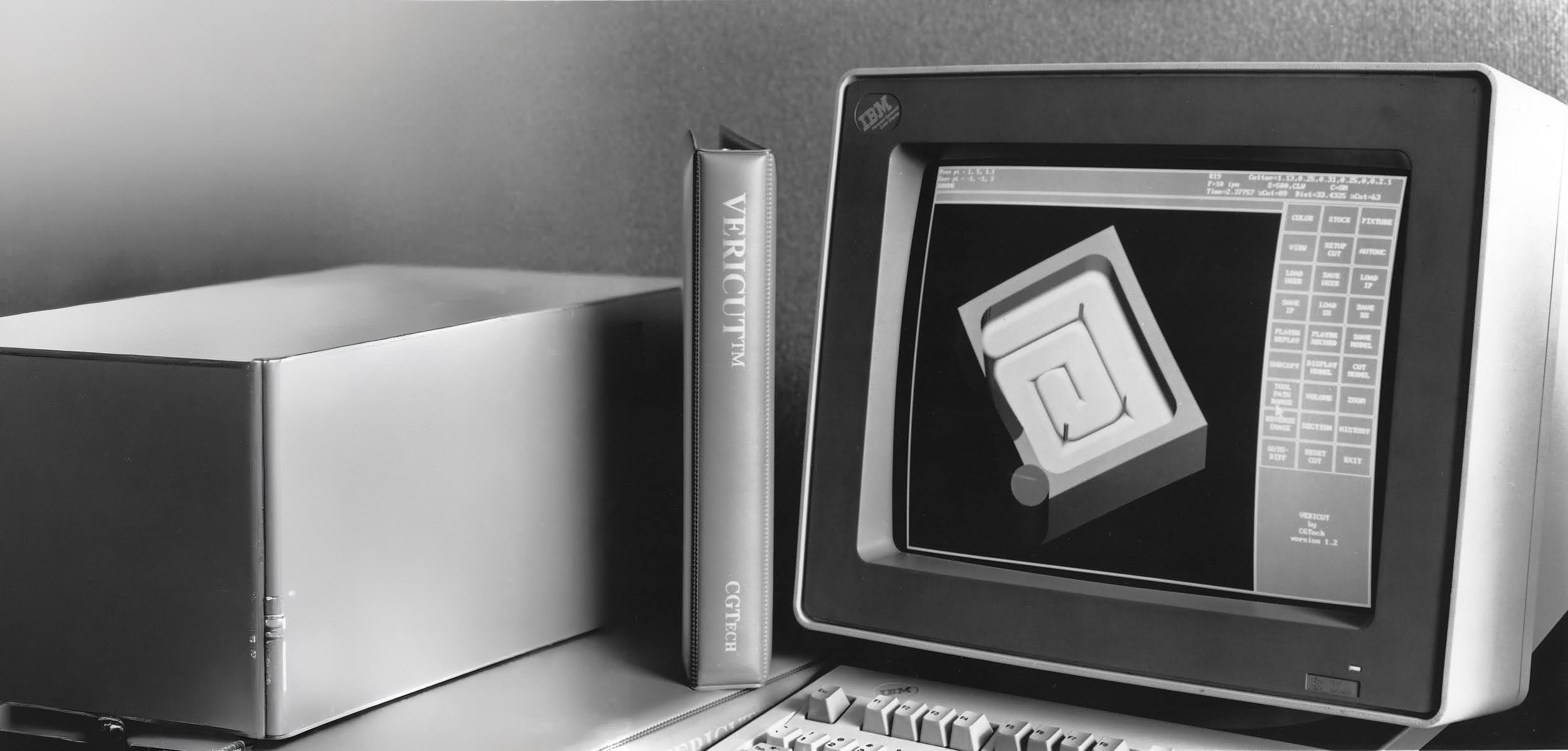

And, more than three decades later, it continues to evolve alongside the manufacturing industry it helped shape.
When manufacturers were beginning to rely more heavily on digital manufacturing tools: around the same time as Microsoft Windows 1.0.
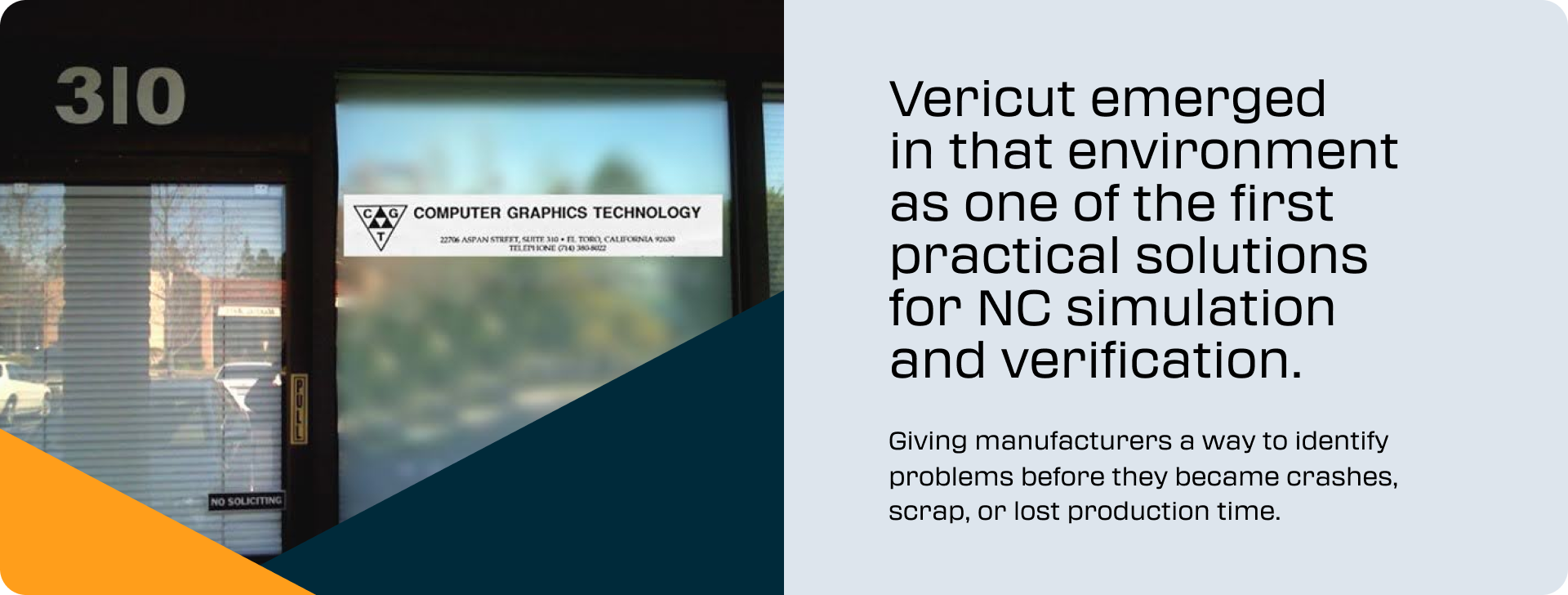
As one of the manufacturing software pioneers, Vericut was created to solve a problem that was becoming increasingly urgent as CNC machining advanced: how do you verify NC programs before cutting metal?
Nearly 40 years on, the Vericut company history reflects the evolution of CNC manufacturing itself - from early NC programming to today’s digital twin–driven production environments. This page tells the story of Vericut’s origins, its evolution alongside the industry, and why its legacy continues to matter.
.png?width=465&height=310&name=Media%20(16).png)
.png?width=120&height=120&name=Frame%2048095573%20(1).png)
Programmers and machinists knew that a single mistake could become very visible, very quickly. Vericut changed that process by allowing manufacturers to verify NC programs in a virtual environment before material was ever cut. What once required machine time, scrap material, and risk could now be validated digitally.
By the late 1980s and early 1990s, this represented a major shift in how manufacturers approached CNC verification.
.png?width=465&height=310&name=Media%20(17).png)
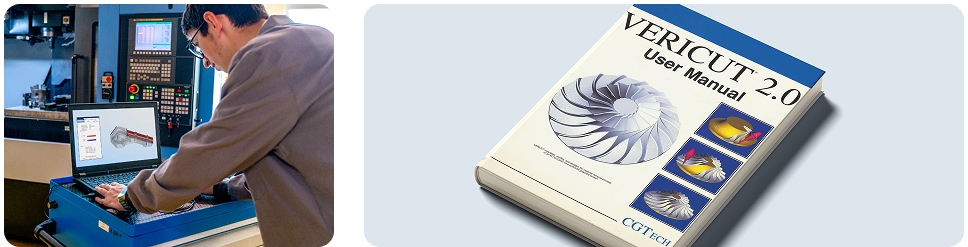
Vericut was first introduced as a CNC verification solution that simulates NC programs before machining.
At a time when manufacturers relied heavily on machine prove-outs, Vericut provided a safer way to identify programming errors and prevent costly crashes.
.png?width=465&height=310&name=Media%20(18).png)
.png?width=465&height=310&name=Media%20(19).png)
As CNC machines became more advanced, Vericut expanded its ability to simulate more complex machine configurations and support a wider range of CNC controllers and machining strategies.
Vericut strengthened its integration with leading CAD/CAM software platforms, allowing manufacturers to seamlessly verify toolpaths generated during programming workflows.
.png?width=465&height=310&name=Media%20(20).png)
.png?width=465&height=310&name=Media%20(21).png)
As digital manufacturing matured, Vericut incorporated more advanced machine simulation and digital twin technology, helping manufacturers simulate full machining environments with high accuracy.
Recent developments have focused on optimization tools, Artificial Intelligence (AI), process efficiency, and smarter machining strategies, helping manufacturers improve cycle times while maintaining safe and reliable machining operations.
.png?width=465&height=310&name=Media%20(22).png)
Since the late 2000s, digital twin technology has become a widely recognized foundation of modern manufacturing, helping organizations validate machining processes virtually before committing to physical production.
These innovations helped move Vericut’s CNC simulation from a specialist tool, to the industry standard of modern CNC manufacturing workflows.
.png?width=465&height=310&name=Media%20(23).png)
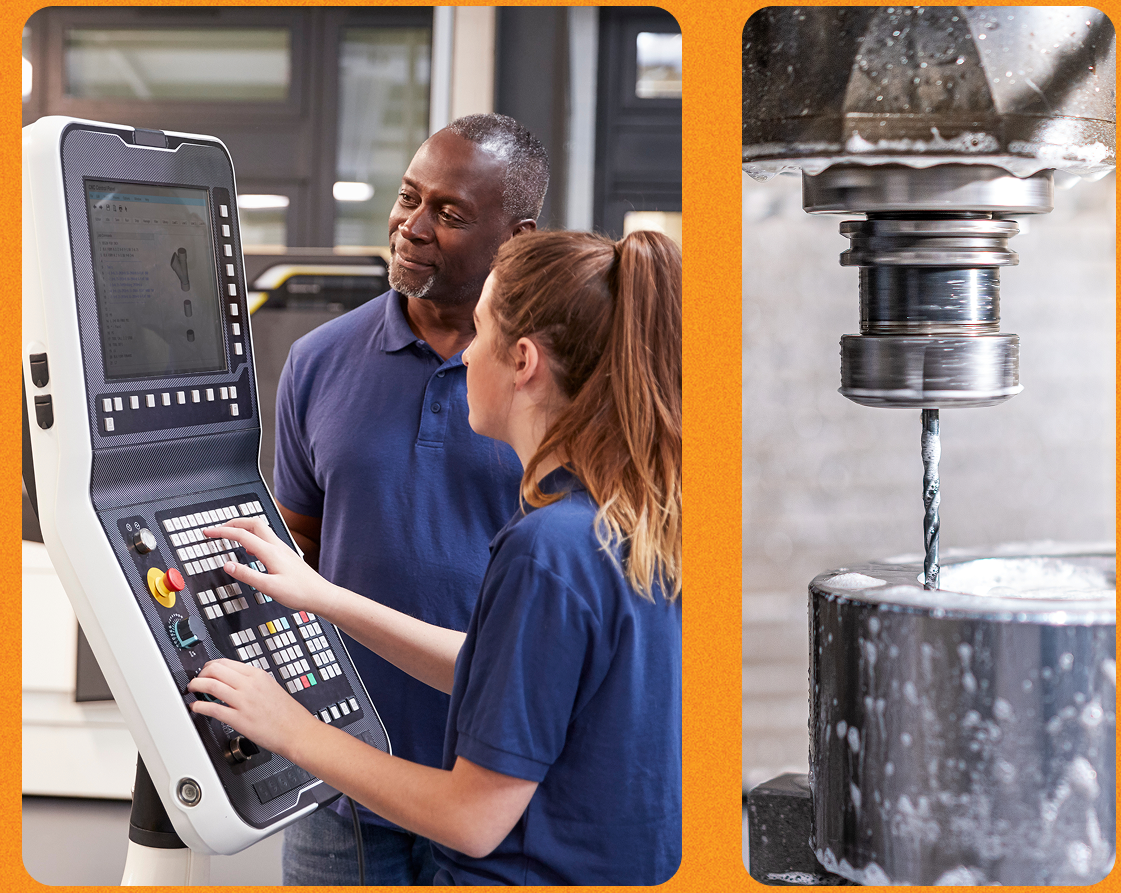
Longevity matters in CNC simulation software, because reliability and predictability at the spindle matter every day of the year. Vericut has remained in use across generations of CNC machines, controls, and operating systems. It has been adopted by manufacturers where machining errors are expensive, and verification is critical.
Trust like that is not earned quickly. It is earned through years of consistent results, long-term customer relationships, and proven performance in real production environments.
That is what the Vericut company history means in practice.
.png?width=122&height=122&name=Frame%2048095573%20(2).png)
The history of Vericut is closely tied to that of CNC manufacturing. And today, the Vericut company history reflects more than three decades of continuous development in CNC verification technology.
From the early days of numerical control to modern digital manufacturing environments, Vericut remains one of the manufacturing software pioneers helping organizations machine with confidence.
Discover how Vericut continues to support modern manufacturing, with decades of proven performance behind it and the future still ahead.

See how Vericut CNC simulation software can help your business forgo its CNC machining frustrations.
Address:
Vericut USA
CGTech Corporate Headquarters
9000 Research Drive
Irvine, California
92618-4214
Phone:
(949) 753-1050


 한국어 - 대한민국