


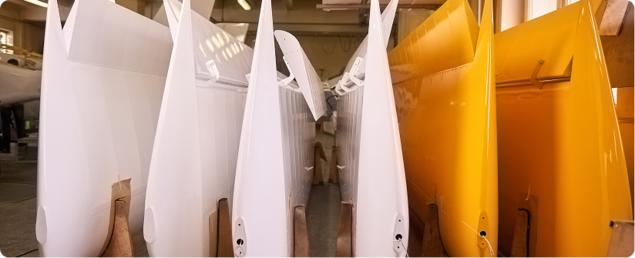
Designs using composites demand higher performance and greater structural efficiency to replace traditional metal components.
Achieving that balance relies on more than selecting the right material. It requires planning and protecting the structural integrity of every laminate produced.
Fiber orientation, ply accuracy, compaction, and defect avoidance all come together to define whether a composite component will meet its expected strength and service life.
This is why many facilities now rely on advanced composite manufacturing programming and simulation software to validate their processes before any material reaches the tool.
What structural integrity means in the composite manufacturing process.
In short, structural integrity refers to the quality and correctness of the composite component’s laminate.
It covers the relationship between fiber direction and load paths, the order and accuracy of the ply stack, the consolidation of each layer, and the understanding of composite defects such as gaps, overlaps, and fiber steering.
When any of these elements fall outside specification, the part becomes non-compliant with the design criteria, potentially resulting in part weakness or reliability. Problems may not appear immediately, but can surface as reduced stiffness, poor fatigue life, or premature failure in service.
For highly-regulated industries like aerospace and defense, this can affect certification and increase long-term maintenance costs. Structural integrity is therefore not only a technical requirement, but also a performance guarantee.
Unique challenges of composite machining.
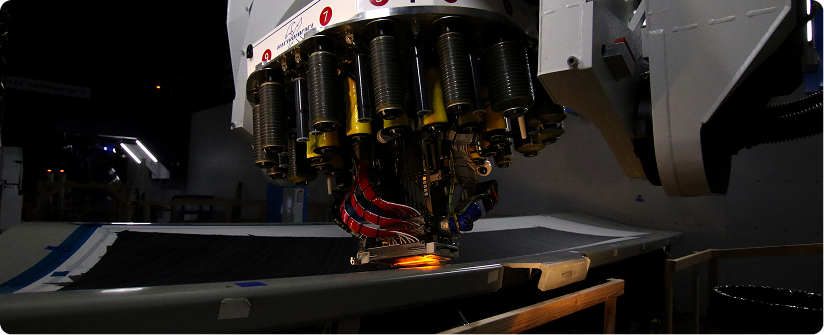
Unlike traditional machining of composite materials, composite lay-up and automated fiber placement involve a workflow that is far more sensitive to machine behavior and surface geometry. Automated Fiber
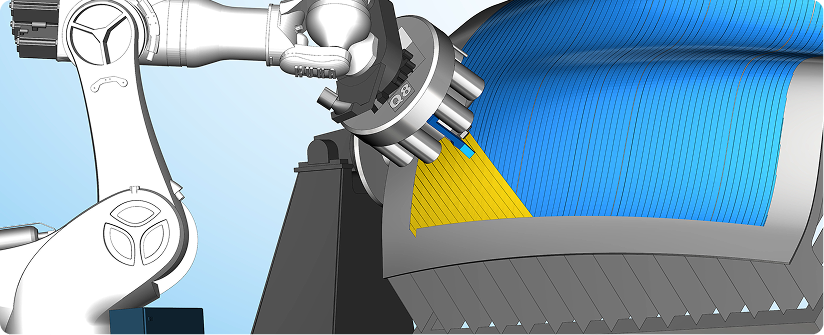
Placement (AFP) and Automated Tape Lay-Up (ATL) systems must navigate tight radii, concave surfaces, and multi-axis toolpaths that influence fiber direction, gaps and overlaps, fiber steering, and ultimately producability.
Programming these systems is complex. The machine must place fiber with high levels of precision, within predetermined ply boundaries, and maintain compaction. Any deviation can introduce composite defects or variations in laminate thickness. Once lay-up is complete, parts typically undergo trimming, drilling, or fastening operations, which require accurate positioning and reliable machine simulation.
These challenges make process verification essential. Small deviations in path or placement can affect the overall strength of the component.
How simulation and verification safeguard structural integrity.
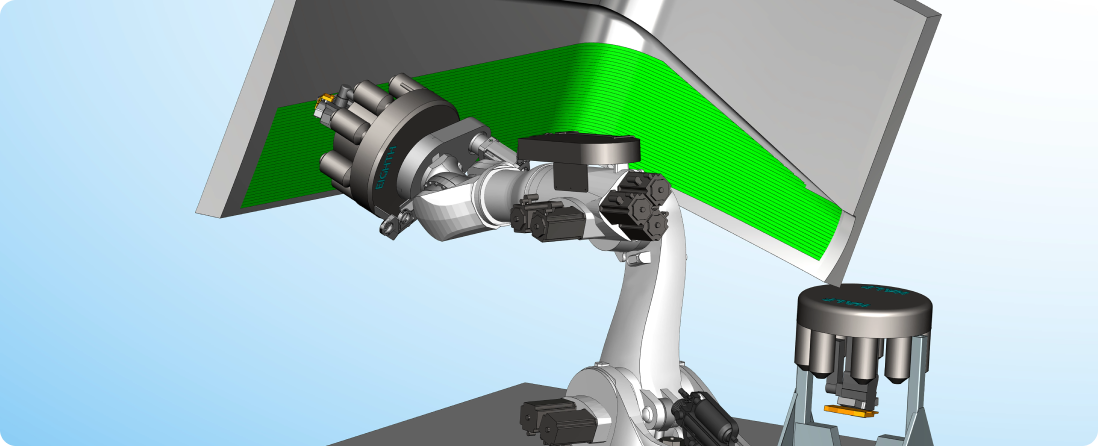
Vericut’s composite software modules support manufacturers from programming to final validation. Vericut Composite Programming (VCP) helps define ply boundaries, fiber paths, and lay-up sequences.
Meanwhile, Vericut Composite Simulation (VCS) simulates the machine itself, evaluating every placement path, head motion, and fiber deposit.
This combination of composite manufacturing simulation software gives teams a clear view of real machine behavior.
It allows measurement of stack thickness, checks for gaps and overlaps, and validates whether the laminate is built according to the intended design. Simulation also identifies collisions, transitions, singularities, or machine movements that could cause composite damage, part deformation, or general production inefficiencies.
This unique ability to validate composite lay-up in a virtual environment gives manufacturers the confidence to innovate while protecting part quality.
Key metrics and integrity checks in composite manufacturing.
Maintaining structural integrity in the composite manufacturing process means monitoring several critical factors throughout the workflow.

CNC Simulation produces quantifiable results that can be used to develop inspection criteria and maintain consistent quality across production runs.
Best practices for protecting composite structural integrity.
Manufacturers who maintain high structural integrity of composite components typically adopt the following principles.
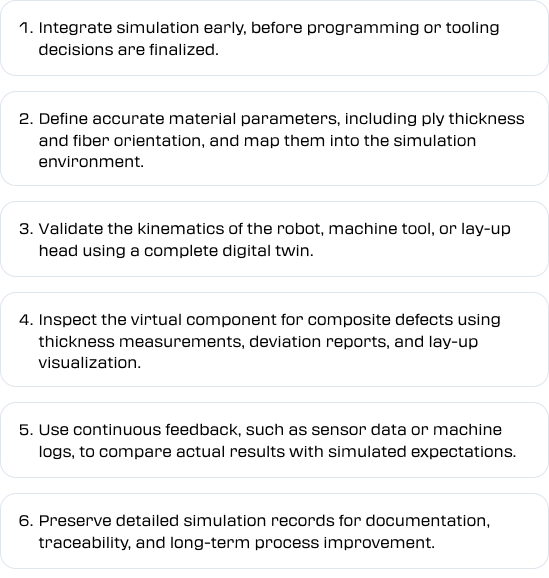
These steps strengthen the composite manufacturing process control, and ensure consistency between digital intent and physical results.
“Software is an integral part of our turnkey offer; customers must program and simulate their composite components to unlock optimized designs.
Vericut are leaders in this field, so we definitely picked the right partner and know we can make our worldwide reseller agreement a success.”
Dr Dominic Bloom
Business Development Manager - iCOMAT
Business benefits of high-integrity composite manufacturing.
When structural integrity is built into every composite part, the benefits extend beyond immediate production gains. Manufacturers see lower scrap rates, fewer rework cycles, and faster time to full-rate production.
Certification processes become more predictable because the laminate behaves as intended.
Strong process control also leads to material savings. Eliminating unnecessary fiber usage or scrap from nonconforming lay-up helps reduce cost.
High-quality composite components also contribute to weight reduction, improved strength and stiffness, and longer service life, all of which matter in performance-critical sectors.
In conclusion: improve your composite manufacturing process with Vericut.
Shops looking to enhance their composite manufacturing workflows can begin by evaluating how AFP or ATL processes are carried out today.
After defining lay-up strategies and quality requirements, installing Vericut VCP and VCS allows teams to simulate their first pilot part and review the resulting fiber paths, ply build-up, and defect checks.
From there, the workflow can be expanded across programs and machines, integrating Vericut with existing CAD and CAM systems.
To explore how simulation can support your operation, why not request a free demo, and see for yourself how Vericut composite manufacturing simulation software helps ensure structural integrity from the first ply to the final machining step.