Forgings are expensive. Castings are heavy. Cycle times are long. Many parts will only run once. At the same time, oil and gas machining has become more complex.
Multi-axis motion, deep internal features, hybrid additive workflows, and extended run times make manual checks and traditional prove-outs insufficient for modern oil and gas operations.
Vericut is chosen in oil and gas and energy manufacturing for its ability to reduce operational risk while respecting the experience of machinists and engineers. It verifies the exact NC code you plan to run, against a true-to-machine digital twin, before high-value material reaches the spindle.
.svg)
Deep bores, intersecting internal channels, heavy wall sections, and intricate sealing surfaces lead to machining cycles that can exceed 40, 60, or even 100 hours. Discovering an issue late in the cycle can mean losing days of spindle time.
.svg)
Oil and gas component manufacturing often deals with one-off or small-batch parts. There is a limited opportunity to refine programs through repetition. Each job must succeed independently.
.svg)
Valves, manifolds, housings, turbine components, and other oil & gas machining components often operate under extreme pressure or temperature. Machining errors may not be recoverable.
.svg)
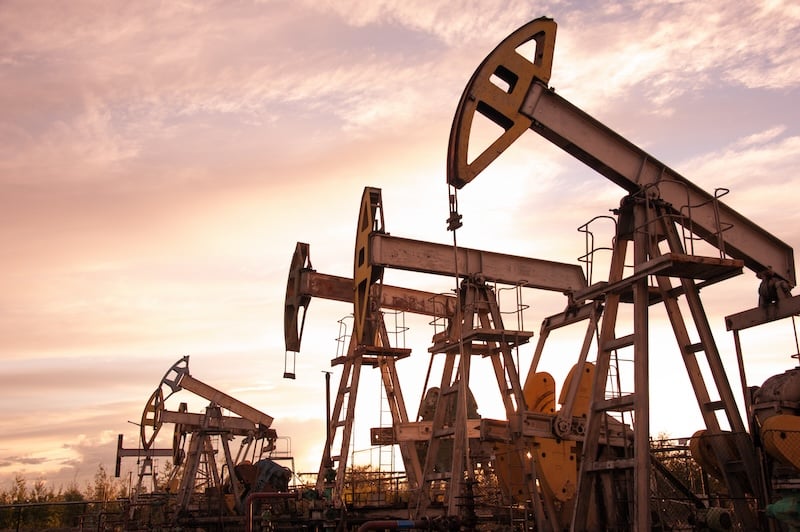
Energy machining frequently uses large horizontal mills, vertical turning lathes, and gantry systems. Long tools, heavy fixtures, and deep cavities increase clearance risk and machine interaction complexity.
In oil and gas manufacturing, errors are not minor setbacks. They can mean scrapped forgings worth tens of thousands of dollars, damaged machines, delayed field operations, or missed contractual deadlines.
Energy manufacturing environments often rely on large CNC machines running extended cycles on pressure-critical or safety-critical components. Programs must run correctly the first time.
Vericut verifies real, post-processed NC code using a machine-accurate digital twin. That means:
Complex multi-axis motion is validated before execution.
Machine limits and head/table movement are checked in advance.
Fixtures, tools, holders, and machine components are evaluated together.
For oil and gas machining solutions, where part count is low but value is high, confidence before cutting matters more than speed of iteration.
I love Vericut. If there’s any way I can use it, I will, and the operators feel the same way. Vericut definitely helps us achieve efficiency, safety, and quality.

Oil and gas machining often centers around large, pressure-retaining and flow-control components, including:
Valve bodies and bonnets.
Housings and manifolds.
Flanges and connectors.
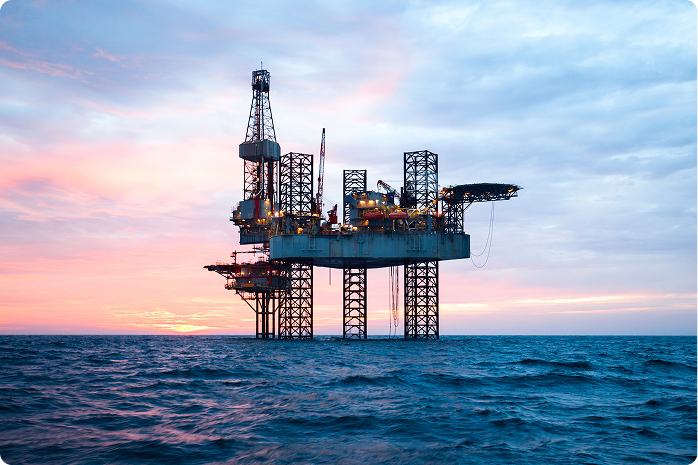
Subsea and wellhead components.
Drilling and completion tooling.
These parts frequently involve deep bores, intersecting internal passages, sealing surfaces, and heavy material removal. Multi-setup machining and orientation changes introduce cumulative risk. Vericut enables teams to validate complete machining sequences across setups, ensuring tool access, clearance, and machine motion are correct before high-value components reach the spindle.
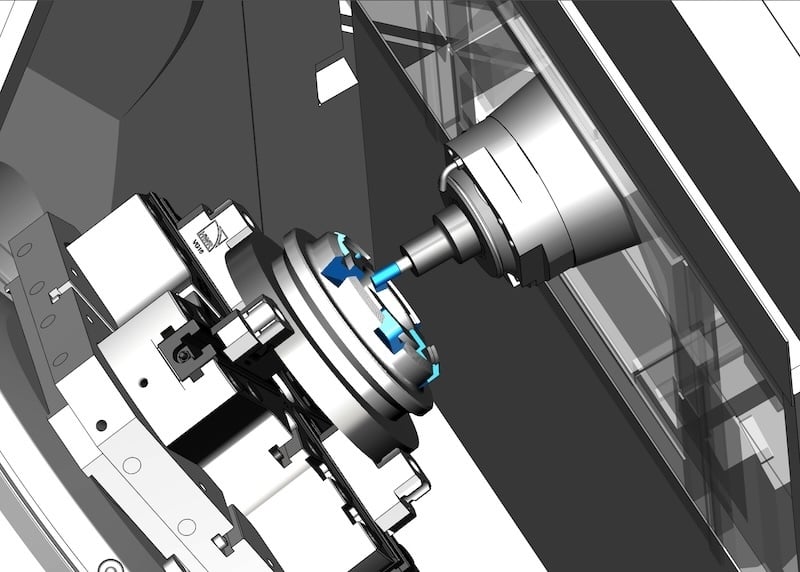
Energy and oil and gas components often contain internal channels, cross-drilled features, and deep cavities that are difficult to visualize solely through toolpath review.
Simulation provides a controlled way to evaluate:
Tool reach and holder clearance inside deep bores.
Rotary axis positioning in confined spaces.
Head and table movement relative to part geometry.
This is especially critical where internal geometry affects pressure containment or flow performance.
Oil and gas component manufacturing frequently involves multiple machines or staged operations. A part may be moved from a horizontal machining center to a vertical turning lathe, then back for finishing operations.
Vericut allows manufacturers to validate programs independently while maintaining confidence in cumulative geometry and setup transitions.
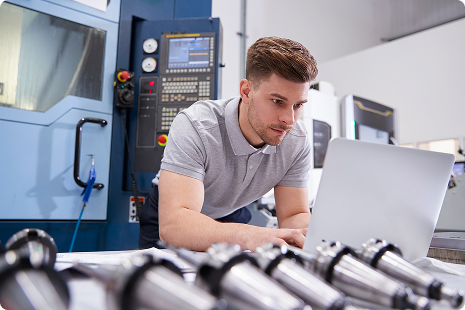

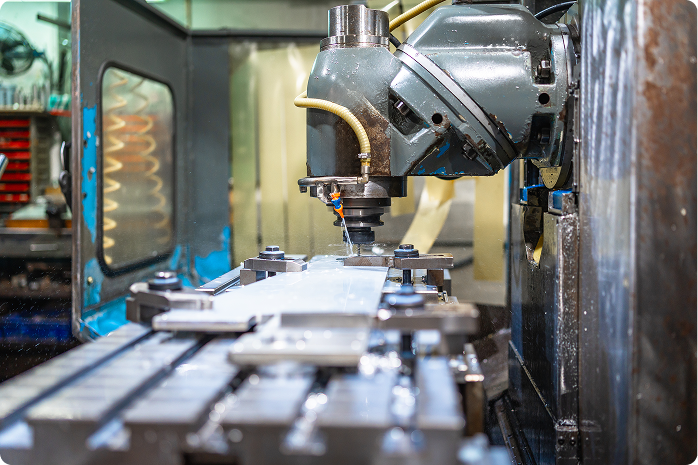
Energy machining includes turbine components, pressure-critical casings, shafts, and structural elements produced on large horizontal, gantry, and vertical turning platforms.
Vericut simulates full machine kinematics and motion limits, helping teams understand exactly how complex programs will execute on large-format equipment.
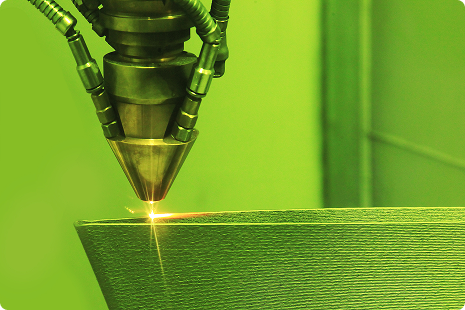
Additive manufacturing in oil and gas is increasingly used for complex geometries, repair operations, and specialized components.
Hybrid workflows introduce new verification requirements, including:
Machining of additively manufactured oil and gas components.
Validation of toolpaths against variable stock conditions.
Detection of excess or insufficient material before finishing operations.
Vericut supports these hybrid additive/subtractive workflows by enabling accurate stock modeling and NC code validation before machining begins.

See how Vericut CNC simulation software can help your business forgo its CNC machining frustrations.
Address:
Vericut USA
CGTech Corporate Headquarters
9000 Research Drive
Irvine, California
92618-4214
Phone:
(949) 753-1050


 English - United Kingdom
 日本語 - 日本
 한국어 - 대한민국