  • vi icon
  • You make it, we simulate it.

    Book your free demo today.
    Hero image

    CNC Simulation Software for Oil, Gas, and Energy Machining.

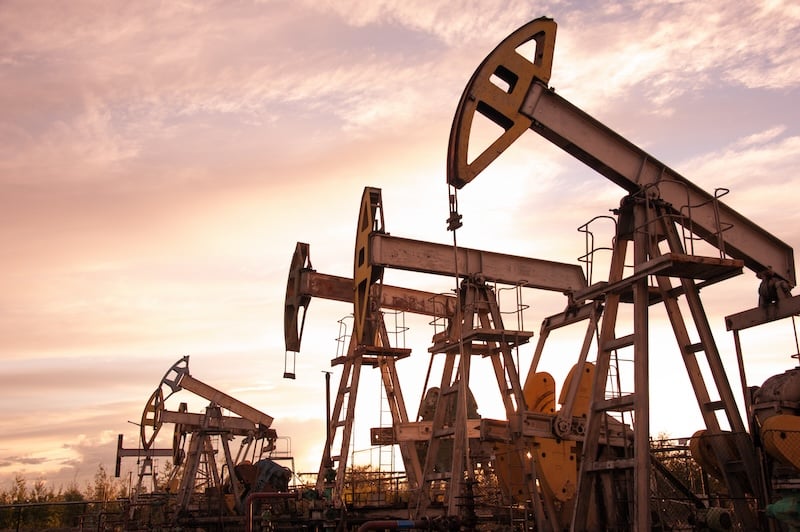
    CNC machining for the oil and gas industry and wider energy sector involves high-value, low-volume components where a single machining error can have significant financial and operational consequences.

    Forgings can be extremely expensive. Castings can be large and difficult to replace. Machining cycles can run for many hours, and some components may only ever be manufactured once.

    At the same time, oil and gas machining is becoming increasingly complex. Multi-axis CNC machining, deep internal features, hybrid additive manufacturing workflows and extended cycle times all make manual checks and traditional machine prove-outs less suitable for modern energy manufacturing.

    Vericut is CNC simulation and verification software used in oil and gas and energy manufacturing to reduce operational risk while supporting the expertise of machinists and manufacturing engineers.
    By verifying the actual NC code intended to run on the CNC machine against a true-to-machine digital twin, Vericut helps manufacturers identify potential problems before high-value material reaches the spindle.
    Oil-Gas-3
    Frame 48095663 (18)

    Long machining cycles and complex component geometries.

    Deep bores, intersecting internal passages, heavy wall sections and intricate sealing surfaces can result in CNC machining cycles lasting 40, 60 or even more than 100 hours.

    When a machining error is discovered late in the process, manufacturers can lose days of valuable spindle time, along with significant amounts of material and production capacity.

    Frame 48095663 (19)

    High-value, low-volume component manufacturing.

    Oil and gas component manufacturing often involves one-off parts or small production batches.

    There is limited opportunity to refine a CNC programme through repetition, meaning each job must perform reliably in its own right.

    Frame 48095663 (17)

    Pressure-critical and safety-critical parts.

    Valves, manifolds, housings, turbine components and other oil and gas machining components may operate under extreme pressure, high temperatures or significant mechanical loads.

    Machining errors that affect sealing surfaces, structural integrity or component geometry may be difficult or impossible to recover from once production is complete.

    Frame 48095663 (16)

    Large CNC machines and long-reach tooling.

    Energy manufacturing frequently uses large horizontal machining centres, vertical turning lathes, gantry systems and other large-format CNC machine tools.

    Long-reach cutting tools, heavy fixtures and deep cavities increase the potential for clearance issues and make the interaction between the machine, tooling, workpiece and workholding more complex.

    Why CNC simulation matters for oil and gas and energy machining

    In oil and gas and energy manufacturing, machining errors can have consequences far beyond the shop floor.

    A single mistake could result in a high-value forging being scrapped, a CNC machine being damaged, field operations being delayed or a contractual delivery deadline being missed.

    Energy manufacturing environments often rely on large CNC machine tools running extended machining cycles on pressure-critical and safety-critical components. For these applications, programmes need to perform correctly the first time.

    Vericut verifies the actual post-processed NC code using a machine-accurate digital twin. This allows manufacturers to validate complex multi-axis motion, machine limits, head and table movement, tooling, holders, fixtures and machine components before production begins.

    For oil and gas machining solutions and energy manufacturing applications, where component volumes may be low but the value and consequences of failure are high, confidence before cutting is essential.

    Media - 2026-07-06T080119.465

    Benefits of CNC simulation for oil, gas and energy manufacturers

    In oil and gas machining and energy manufacturing, the cost of failure rarely stops at the CNC machine.

    A scrapped component can delay field operations. A damaged machine can affect multiple production schedules or contracts. A missed delivery window can create significant commercial consequences.

    Vericut helps manufacturers identify and reduce these risks before machining begins.

    01.

    Reduce risk during long, uninterrupted CNC machining cycles.

    Many oil and gas CNC machining programmes run for extended periods, including overnight and across multiple shifts.

    The longer the machining cycle, the greater the potential impact of discovering an error late in the process.

    By reviewing the complete programme before execution, Vericut helps manufacturing teams enter extended machining cycles with greater confidence and fewer unexpected problems during production.

    02.

    Protect high-value components before machining begins

    Oil and gas components are often manufactured from large forgings and castings with significant material value and long lead times.

    Once machining has started, the opportunity to recover from a major error can be limited.

    Vericut verifies the complete NC programme before production, helping increase confidence that the first cut is the correct cut — particularly when replacing the raw material would be costly or involve a long lead time.

    03.

    Identify interaction risks in complex CNC machining set-ups

    Oil and gas manufacturing can involve deep cavities, long-reach tools, angled heads, heavy fixtures and multiple machining orientations.

    The risk often comes not from one individual element, but from the interaction between all of them.

    Vericut evaluates cutting tools, holders, fixtures, machine components and programmed movement together. This system-level approach helps reveal potential problems that may not be visible when reviewing an isolated toolpath.

    04.

    Increase confidence in pressure-critical and safety-critical components

    Components used in oil and gas and energy applications may operate under high pressure, high temperatures and substantial mechanical loads.

    Machining accuracy can directly affect sealing performance, pressure containment, structural integrity and operational reliability.

    Vericut supports controlled CNC machining processes by helping manufacturers verify that programmed geometry and machine movement behave as intended before production begins.

    05.

    Reduce CNC machine time spent on manual prove-outs.

    Large CNC machine tools used in energy manufacturing represent a significant investment.

    Extended manual prove-outs can occupy valuable machine capacity and reduce the time available for productive machining.

    By validating CNC programmes offline, Vericut helps shift programme checking away from the machine tool, allowing expensive equipment to spend more time in production rather than on trial-and-error adjustments.
     

    I love Vericut. If there’s any way I can use it, I will, and the operators feel the same way. Vericut definitely helps us achieve efficiency, safety, and quality.

    Media-1
    James Wardell
    Programming Technology Manager - Conroe Machine

    Applications of CNC simulation in oil and gas and energy manufacturing

    Oil and gas and energy manufacturing covers a wide range of component types, CNC machine tools and production environments.

    From upstream drilling equipment and subsea components to downstream processing infrastructure and power generation systems, the complexity of the parts and the consequences of machining errors can be significant.

    Vericut supports these manufacturing workflows by providing greater visibility and confidence before complex CNC programmes reach production.

    Oil & gas CNC machining components.

    Oil and gas machining often involves large pressure-retaining and flow-control components, including valve bodies and bonnets, housings and manifolds, flanges and connectors, subsea and wellhead components, and drilling and completion tooling.

    These components can feature deep bores, intersecting internal passages, sealing surfaces and significant material removal requirements.

    Multiple machining set-ups and changes in component orientation can introduce cumulative risk.

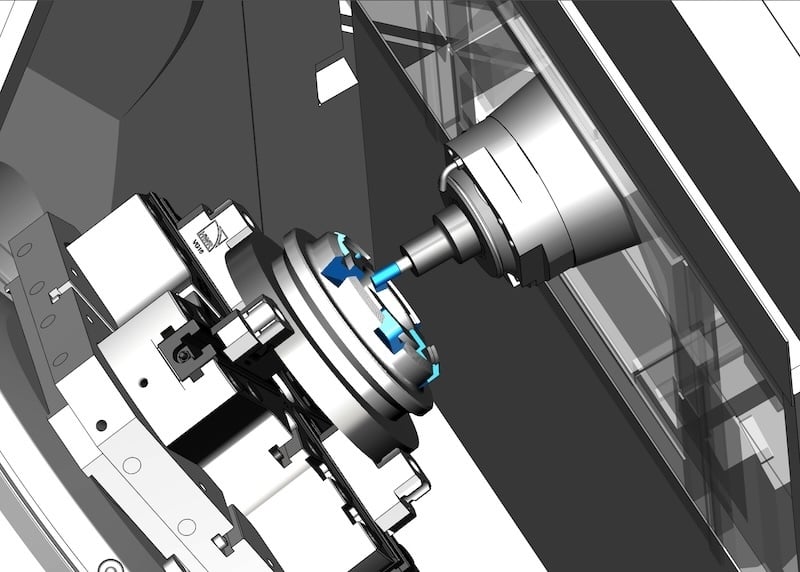
    Vericut enables manufacturers to validate complete machining sequences across multiple set-ups, helping verify tool access, clearance and machine movement before high-value oil and gas components reach the spindle.
    Media - 2026-07-06T080834.056
    VC

    Complex internal geometries and deep-feature machining.

    Energy and oil and gas components frequently include internal channels, cross-drilled features and deep cavities that can be difficult to assess through conventional toolpath review alone.

    CNC simulation provides a controlled environment for evaluating tool reach and holder clearance inside deep bores, rotary-axis positioning in confined spaces, and head and table movement in relation to the component geometry.

    This is particularly important where internal features influence pressure containment, fluid flow or component performance.

    Multi-machine and multi-set-up CNC machining workflows.

    Oil and gas component manufacturing frequently involves multiple CNC machines or staged machining operations.

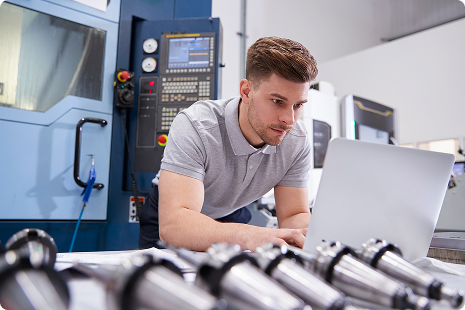
    A component may move from a horizontal machining centre to a vertical turning lathe before returning to another machine for finishing operations.

    Vericut allows manufacturers to validate CNC programmes independently while maintaining confidence in cumulative geometry and transitions between different machining set-ups.

    Media - 2026-07-06T081603.561
    Media - 2026-07-06T081923.628

    Energy manufacturing and large CNC machine tools 


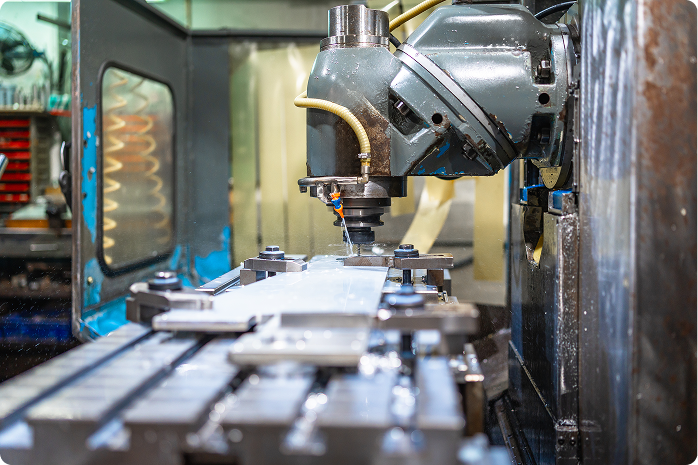
    Energy machining includes turbine components, pressure-critical casings, shafts and structural components manufactured on large horizontal machining centres, gantry machines and vertical turning lathes.

    Vericut simulates complete machine kinematics and movement limits, helping manufacturing teams understand how complex CNC programmes will execute on large-format equipment.

    Additive manufacturing in oil and gas 


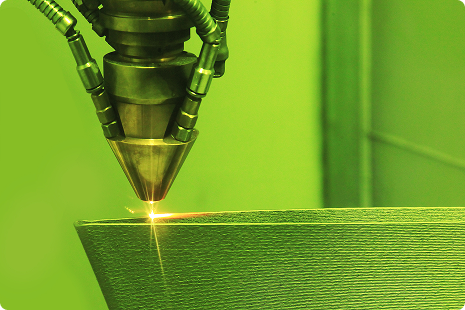
    Additive manufacturing is increasingly being used in oil and gas for complex geometries, component repair and specialised applications.

    Hybrid additive and subtractive manufacturing workflows introduce additional CNC verification requirements, including machining additively manufactured components, validating toolpaths against variable stock conditions and identifying excess or insufficient material before finishing operations.

    Vericut supports hybrid additive and subtractive workflows by enabling accurate stock modelling and NC code validation before machining begins.
    Media - 2026-07-06T082327.920
    Oil, Gas, and Energy

    Oil and Gas and Energy Machining FAQs 

    01.
    How reliable is Vericut simulation for CNC programmes with 40–100+ hour cycle times?

    Vericut is particularly valuable for long-cycle CNC machining applications.

    Oil and gas machining programmes can involve extended cutting times, complex multi-axis movement and numerous tool changes. Vericut simulates the complete NC programme, including machine kinematics, axis limits, tool assemblies and control behaviour.

    By reviewing the full machining sequence before cutting begins, manufacturers can reduce the likelihood of discovering a programming error many hours into a long production cycle.

    02.
    Can Vericut help prevent the scrapping of expensive oil and gas forgings and castings?

    Yes. This is an important application of CNC simulation in oil and gas component manufacturing.

    Large forgings and castings can represent significant material investment and may have long replacement lead times.
    Vericut helps identify potential gouges, excessive material removal, unexpected over-travel and collision conditions before machining begins, helping reduce the risk of programme-related scrap and costly production errors.

    While no software can eliminate every manufacturing risk, CNC simulation can significantly reduce the likelihood of errors caused by the NC programme.

    03.
    How can Vericut support overnight or unattended CNC machining?

    Vericut increases confidence in extended and unattended machining by validating the complete NC programme before execution.

    For energy machining operations running overnight or across weekends, an undiscovered programming issue can create significant risk.

    By simulating the complete sequence in advance, manufacturers can reduce uncertainty before committing to extended or unattended machining.

    However, unattended operation still depends on factors such as tooling condition, set-up integrity and the condition of the machine tool. Vericut addresses programmed machine behaviour and does not replace appropriate mechanical checks and production controls.

    04.
    Has Vericut been used for pressure-critical and safety-critical components?

    Vericut is used in oil and gas and energy manufacturing environments where machining accuracy can influence sealing performance, pressure containment, structural integrity and operational reliability.

    In these applications, CNC simulation supports process control by helping manufacturers verify programmed geometry and machine movement before production begins.

    05.
    Can Vericut simulate the large CNC machines used in energy manufacturing?

    Yes. Vericut supports large horizontal machining centres, gantry mills, vertical turning lathes and complex multi-axis CNC machine tools commonly used in energy manufacturing.

    It models complete machine kinematics, axis limits and movement behaviour to help ensure the simulation reflects the expected real-world machining process.

    06.
    Does Vericut support additive manufacturing workflows in oil and gas?

    Yes. For additive manufacturing in oil and gas, Vericut can simulate machining operations applied to additively manufactured components.

    It helps manufacturers identify excess or insufficient stock and validate CNC toolpaths before finishing operations begin, supporting more predictable hybrid additive and subtractive manufacturing workflows.

    Explore more Vericut products.

    Vericut Verification

    Detect errors, eliminate collisions and say goodbye to manual prove-outs once and for all.

    Vericut Force

    Optimize your tool paths and enhance your NC programs for the fastest, most efficient machines, ever.

    AUTO-DIFF™

    Compare CAD design modules to Vericut simulations and detect design differences and weaknesses.

    Multi-Axis

    Verify complex multi-axis machine applications and check for errors at the workpiece and the tool.

    Machine Connectivity & Monitoring

    Create and manage your most accurate digital twins ever by leveraging CNC machine data from your shop floor.

    Brand Icons - light

    Request a demo today.

    See how Vericut CNC simulation software can help your business forgo its CNC machining frustrations.  

    Address:

    Vericut UK
    Curtis House, 34 Third Avenue,
    Hove, East Sussex, BN3 2PD

    Phone:
    +44 (0)1273-773538