  • verticut intelligence icon
  • You make it, we simulate it.

    Book your free demo today.
    Hero image

    CNC Simulation Software for Automotive Machining.

    Automotive manufacturing - just like the vehicles it produces - relies on speed, repeatability, and control.

    CNC machine programs must run safely across high-volume production environments, complex multi-axis equipment, and constantly evolving vehicle platforms.
    Vericut is the CNC simulation software for automotive machining that verifies the exact NC code you plan to run on the machine.

    By detecting collisions, overtravels, and machining errors before production begins, Vericut helps automotive manufacturers reduce risk, protect equipment, and improve production efficiency at scale.

    From powertrain components, to ultra-modern EV battery systems, Vericut supports the machining demands of the modern automotive industry, where performance is measured in both quality and throughput.
    Automotive-3
    Brand Icons - light (2)-1

    High-volume production with limited downtime.

    Automotive manufacturing depends on speed and repeatability. Programs must run reliably across production lines where even small interruptions can affect task time, output, and cost. In this environment, machining errors scale quickly, making consistency and process control essential.

    Brand Icons - light (10)

    Rapid platform change and electrification.

    Electromobility is reshaping the automotive industry. EV battery production, hybrid development, and new propulsion architectures introduce new part types, tighter packaging constraints, and evolving machining requirements. Manufacturers need verification processes that can keep pace with constant design and program updates.

    Brand Icons - light (11)

    Accelerated machine complexity.

    Automotive CNC machining now involves more multi-axis motion, tighter clearances, and more demanding setups than ever before. Fixtures, tool assemblies, rotary limits, and machine-specific behavior all introduce variables that can lead to collisions or unexpected results if not proven in advance.

    Brand Icons - light (4)

    Efficiency pressures and intense quality demands.

    Automotive machining is often driven by aggressive cycle time targets, but performance cannot come at the expense of quality. Manufacturers must balance cutting conditions, tool life, and surface integrity while maintaining predictable output across multiple machines and facilities.

    Why CNC simulation matters for automotive manufacturing.

    Automotive machining is in a state of constant, and rapid, change.

    Electrification, hybrid technology, connected vehicles, and autonomous development are reshaping what manufacturers produce, and how quickly they need to deliver it.

    At the same time, production expectations remain uncompromising: tight tolerances, short cycle times, and consistent results across multiple machines, shifts, and plants.

    Vericut helps automotive manufacturers meet those demands by verifying real G-code, not theoretical toolpaths. That means the behavior you validate in simulation reflects what the machine will actually do on the shop floor - reducing uncertainty before production begins.

    For organizations focused on standardization, uptime, and process reliability, Vericut becomes a practical foundation for safer, more efficient automotive CNC machining.
    Automotive-4

    Benefits for automotive machining.

    Automotive machining is defined by repetition. The same part may run thousands of times across multiple machines, plants, and suppliers, with little tolerance for variation. In that kind of environment, reliability is not a nice-to-have. It is the difference between steady output and costly disruption.

    Vericut helps automotive manufacturers increase certainty in CNC production by verifying real machine code before machining begins.

    That means fewer surprises at the control, fewer interruptions on the line, and more confidence that every program will perform as intended, whether it is the first cycle, or the thousandth.

    01.

    Protect machines, fixtures, and production capacity.

    Unplanned collisions do not just damage equipment. They interrupt schedules, affect downstream operations, and create avoidable downtime in high-demand environments. Vericut detects crashes, over-travel conditions, and gouges early, helping automotive plants keep machines running safely and predictably.

    02.

    Reduce scrap in high-volume manufacturing.

    In automotive manufacturing, small errors scale quickly. A single programming issue can affect dozens or hundreds of parts before it is caught. Vericut verifies each NC program in advance, supporting first-time-right execution and reducing scrap, rework, and unnecessary material loss.

    03.

    Faster cycles, without increasing instability.

    Automotive production is always under pressure to run faster, but speed must remain controlled. Vericut Force Optimization uses physics-based cutting analysis to improve feeds and speeds while maintaining stable tool engagement, consistent tool life, and repeatable machining performance.

    04.

    Shorten prove-outs to keep production moving.

    Time spent proving out programs on the shop floor is time taken away from output. Vericut reduces the need for manual trial runs and iterative adjustments by validating machining behavior before the part reaches the spindle.
     

    05.

    Standardization across platforms and plants.

    Automotive programs rarely stay in one place. They move across machines, facilities, and global supply chains. Vericut supports consistent verification and process discipline across all machining operations, helping manufacturers maintain quality and reliability at scale.
     

    Many shops might feel like they can function without toolpath simulation, just as they’ve been doing for the past ten or twenty years. The reality is that Vericut can be just as much of a profitability driver as adding another CNC machine tool.

    Media-1
    James O’Toole
    Operations Manager - Keselowski Advanced Manufacturing

    Applications in automotive.

    Automotive CNC machining spans a wide range of parts, platforms, and production demands - from traditional powertrain work, to electrified vehicle systems.

    Fortunately, Vericut supports all areas of automotive machining including:

    Powertrain and drivetrain components.

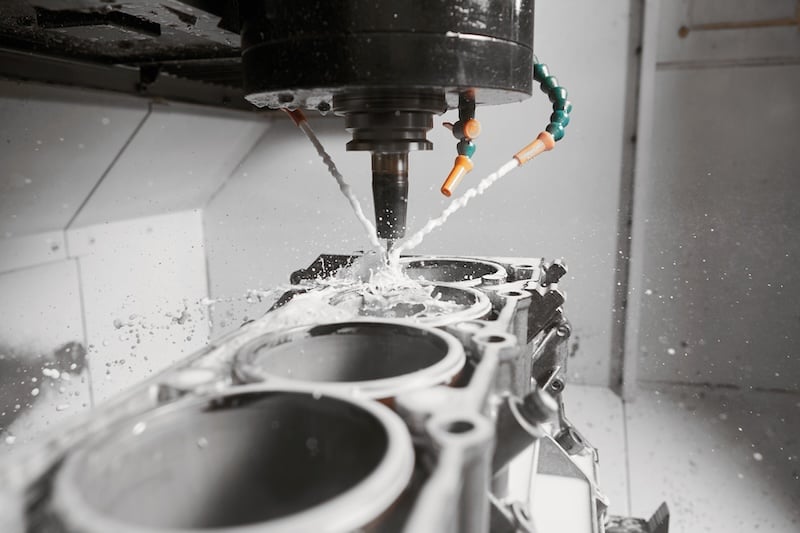
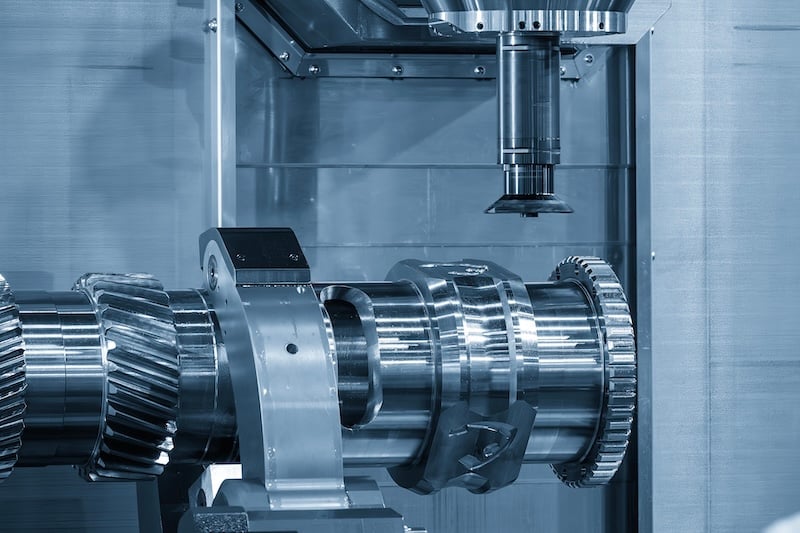
    Including engine blocks, transmission housings, gear systems, and high-precision rotating assemblies where tolerances and surface integrity are critical.

    Media (32)
    Media (33)

    EV battery production and electromobility platforms.


    As electric vehicle adoption grows, manufacturers face new machining challenges in battery enclosures, structural housings, and lightweight assemblies.

    Vericut helps validate these programs before production, reducing risk in emerging EV workflows.

    Hybrid cars and hybrid vehicle development.

    Hybrid technology introduces complex part variation across platforms.

    Vericut supports machining verification for hybrid power systems and next-generation propulsion architectures.

    Media (34)
    Media (35)

    High-volume automotive part production.


    For manufacturers producing large quantities of CNC machining automotive parts, Vericut provides the process confidence required to maintain uptime, reduce scrap, and standardize execution across production lines.

    DEFENSE

    Automotive Machining FAQs.

    01.
    Why do I need CNC simulation software for automotive manufacturing?

    Because automotive production depends on speed and repeatability. CNC simulation verifies machining programs before real machining begins, helping reduce costly errors, scrap, and downtime.

    02.
    How does Vericut help automotive manufacturers reduce machining errors?

    Vericut verifies real G-code, detecting collisions, gouges, and overtravel conditions before machining gets underway.

    03.
    Can Vericut simulate high-volume automotive production?

    It most certainly can. Vericut supports high-throughput automotive environments by improving program reliability and enabling consistent verification processes across production lines.

    04.
    Does Vericut support multi-axis automotive machining?

    Absolutely. Vericut is designed for complex multi-axis kinematics, including tight-clearance setups common in automotive machining.

    05.
    What types of automotive parts can be simulated with Vericut?

    From engine and transmission components to EV battery housings and hybrid vehicle assemblies, Vericut supports a wide range of automotive CNC machining applications.

    06.
    Does Vericut integrate with automotive CAM systems?

    Vericut integrates with major CAD/CAM platforms, including Mastercam and Siemens NX, supporting streamlined verification workflows.

    Explore more Vericut products.

    Vericut Verification

    Detect errors, eliminate collisions and say goodbye to manual prove-outs once and for all.

    Vericut Force

    Optimize your tool paths and enhance your NC programs for the fastest, most efficient machines, ever.

    AUTO-DIFF™

    Compare CAD design modules to Vericut simulations and detect design differences and weaknesses.

    Multi-Axis

    Verify complex multi-axis machine applications and check for errors at the workpiece and the tool.

    Machine Connectivity & Monitoring

    Create and manage your most accurate digital twins ever by leveraging CNC machine data from your shop floor.

    Brand Icons - light

    Request a demo today.

    See how Vericut CNC simulation software can help your business forgo its CNC machining frustrations.  

    Address:
    Vericut USA
    CGTech Corporate Headquarters
    9000 Research Drive
    Irvine, California
    92618-4214

    Phone:
    (949) 753-1050