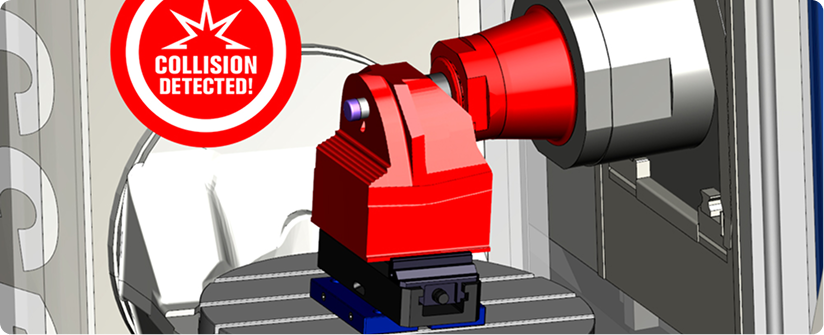


By Matt kloos, Vericut

Medical manufacturers have never had more powerful tools for designing, programming, and validating new products.
Yet introducing a new implant, instrument, or surgeon-led variation can still destabilize an established production environment.
Why?
Part of the answer is simply unavoidable. Innovation disrupts production when programming, setup, collision, and machine-behavior uncertainty is first discovered on the live CNC machine.
Medical products require rigorous testing, documentation, and process validation, and rightly so. A new design cannot simply be introduced into production because it appears promising in CAD, or performs well in an early prototype.
But over time, the disruption surrounding those requirements can become accepted as an inseparable part of innovation.
An established machine setup is removed. Experienced personnel are diverted. A new program is cautiously proved out while existing output waits. Once the development work is complete, the original process has to be restored, and production must recover the time it lost.
Some of that work is necessary, but some of it is simply uncertainty being discovered too late.
The real challenge for medical manufacturers is therefore not how to eliminate validation. It is about preventing every new product, variant, or surgeon-led change from becoming a disproportionately disruptive production event.
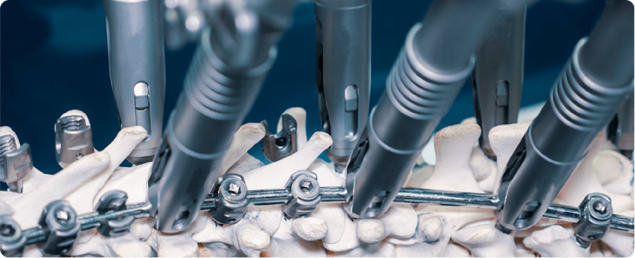
Why small medical-device changes create large production consequences.
In medical manufacturing, a relatively small design change can create a much larger operational consequence.
For example, a surgeon may suggest altering the approach style for a spinal implant. Such as rotating a PLIF (Posterior Lumbar Interbody Fusion) implant.
From a product perspective, that may look like a contained refinement. But from a manufacturing perspective, it can trigger a revised model, new machining strategies, updated NC programs, different workholding, fresh prototype parts, additional inspection, and renewed validation activity.
Because implants belong to a broader range of sizes and configurations, the effect can multiply quickly.
The design change itself may be entirely justified. It may improve placement, simplify the procedure, or address an unmet clinical need.
The problem is not the change itself. It’s that every meaningful change must be absorbed by a production environment that’s already responsible for established products, committed delivery schedules, and validated processes.
I am familiar with this tension from my experience in spinal implant design and manufacturing.
Product development rarely follows a clean, linear route from concept to production. Clinical feedback leads to refinement. Refinement leads to new machining requirements. New machining requirements lead to testing, documentation and further review.
That iteration is often how better medical products are created.
The difficulty lies in making sure that the process of creating the products of tomorrow does not repeatedly undermine today’s production.
Why is medical-device innovation uniquely disruptive?
Medical device manufacturing is shaped by a degree of variation that many other industries do not face.
The human body is not a standardized model. Patients differ in anatomy, size, condition, and clinical need. A product that works for one patient group may require different dimensions, angles, or features for another.
This is especially visible in spinal implants, joint replacements, bone plates, surgical instruments, and other highly specialized applications.
A single product concept can quickly become a family of related components, each with its own manufacturing considerations.
Surgeons also play an important role in product development. Their practical experience can reveal opportunities to improve an implant, instrument, or procedure.
A requested change may begin as a clinical observation: a different orientation could improve access, another instrument could simplify placement, or an additional size could better support patients not well served by the existing range.
Those insights are invaluable, and represent a significant part of what moves medical technology and science forward.
But the reality is that every clinically valuable change must eventually become a stable, repeatable, and controllable manufacturing process.
Engineering must determine how the revised design will be produced. CNC programmers need to create or modify the machining strategy. Production must find the time and space to manufacture the parts. Quality teams need evidence that the process and output meet the required standards.
The development loop may repeat several times before the design and its manufacturing process are ready to proceed, and each iteration places greater demand on machines and production schedules that may already be operating close to capacity.
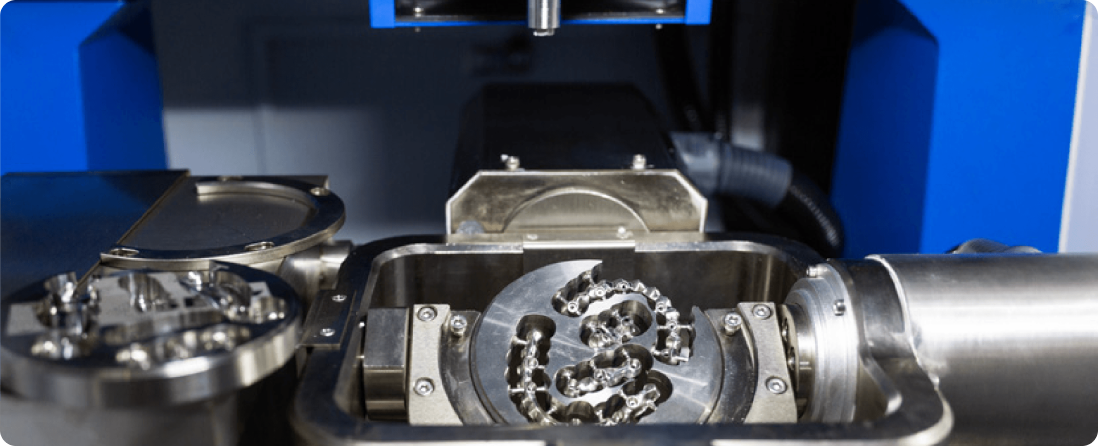
The hidden cost of prototype machine time for medical-device innovation.
When R&D engineering requests machine time for a prototype or new product, it can appear to be a straightforward scheduling decision.
The team needs a part, a CNC machine is required to make it, and production identifies an available window.
The reality is much more complicated.
The selected machine is likely already be running a validated process against a committed schedule. Interrupting that process may require stopping the current job, removing tooling and fixtures, installing a new setup, and introducing the prototype program cautiously.
The work also needs the right people.
A complex new medical part cannot simply be handed to any available operator. It may require an experienced CNC programmer, manufacturing engineer, or machinist with a deep understanding of machine setup and the associated risks. And more often than not, these people are already supporting critical production elsewhere.
Then the prototype has to be proved out. The program may be run slowly, movement by movement, while the team watches for clearance problems, unexpected machine behavior, or differences between the digital plan and the physical process. Parts often need to be inspected, and perhaps adjusted, before another attempt is scheduled.
It doesn’t take long to realize that much of the visible cost is spent producing the prototype.
But it’s the hidden costs that cause the longer-term headaches. It’s all the things the production environment has to stop doing while prototyping is underway.
Output is delayed, machine capacity is consumed, experienced staff are diverted, delivery plans are altered, and wider production teams are commonly tasked with absorbing uncertainty that originated elsewhere in the organization.
Why disruption creates tension between engineering and production?
Engineering and production are often presented as if they are competing for control of the same machine. In reality, both are trying to protect the business.
Engineering is under pressure to move the new product forward. Development deadlines matter, clinical feedback must be acted on, and customers and surgeons may be waiting for an important care solution.
Meanwhile, production is under pressure to protect current output. Existing products must continue to be delivered, and validated processes must remain stable. Machine capacity is finite, and any disruption has a consequence.
Neither side is quote-unquote wrong. The tension emerges because engineering’s development needs become production’s operational uncertainty.
-
How long will the prove-out take?
-
What problems might be discovered?
-
Will the machine remain unavailable longer than planned?
-
How much specialist support will the new setup require?
-
What happens to the current schedule if the first attempt does not work?
These are reasonable concerns, because if engineering can only answer them by saying, “We need to try it on the machine,” production is essentially being asked to accept disruption without a clear view of its likely extent.
Why dedicated R&D production lines do not solve every problem.
The obvious answer, then, is surely to just separate development from production?
Some larger medical manufacturers absolutely do this. They invest in dedicated R&D or prototype facilities and may install machines that mirror those used in production, allowing development teams to test new programs without interrupting the main manufacturing line.
Where it is practical, this can be extremely valuable. It is not, however, a simple or universally realistic solution.
A separate line requires more than another CNC machine - it needs additional floor space, tooling, fixtures, software, maintenance, and qualified personnel capable of programming, setting up, and troubleshooting unfamiliar work. And all of this comes with significant cost.
Then there is the question of how closely the development environment mirrors real production.
Two machines of the same make and model are not necessarily identical in practice. Their controls, configuration, condition, tooling, offsets or surrounding processes may differ. Plus, an NC program proved successfully on an R&D machine may still behave differently when it reaches the actual production equipment.
A dedicated development line can absolutely reduce disruption, but it does not automatically eliminate the need to confirm the process in the production environment.
For many manufacturers, duplicating an entire line is either financially unrealistic or operationally incomplete. They still need a better way to reduce uncertainty before development work reaches the live machine.
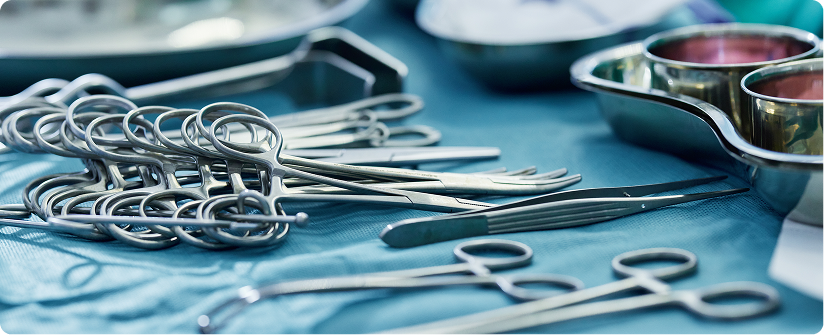
How much production disruption is genuinely required?
Medical manufacturers are rightly cautious about change. We’re talking about one of the most clinically controlled and tightly regulated sectors here, in which end users aren’t just “using” the solutions; their lives might be reliant on them.
The problem arises when the need for validation becomes confused with the belief that every surrounding disruption is equally unavoidable.
Some physical proof will always remain necessary. Manufacturers may still need first articles, inspection, testing and formal validation activity. But that does not mean the physical machine must also be the first place where fundamental programming, setup, or collision detection problems are discovered.
There is a difference between what regulation genuinely requires, and what the manufacturing workflow has gradually learned to tolerate.
Manufacturers who truly understand this distinction have the opportunity to improve how new products are introduced, without weakening the rigor surrounding them.
NC code verification versus experimental prove-out uncertainty.
CNC simulation doesn’t remove the need for testing or formal medical device manufacturing process validation.
It cannot certify that a medical device is suitable for use, replace a manufacturer’s quality procedures, or eliminate every reason for conducting a physical prove-out.
Its value is more practical. CNC simulation and verification allow engineering teams to investigate more of the manufacturing process before live production is interrupted.
With an accurate digital representation of the machine, NC program, tools, holders, fixtures, and stock, teams can examine how the post-processed code is expected to behave. They can identify potential collisions, overtravel, setup conflicts, programming errors, and unexpected machine movement before the program reaches the shop floor.
This changes the purpose of the physical prove-out. Instead of using the production machine to discover every fundamental problem for the first time, the team can use it to confirm a process that has already been reviewed in greater depth.
The objective here is not to remove physical proof. It’s to make physical proof less experimental.
That matters because the cost of learning on a production machine extends far beyond the cost of a single part. It affects capacity, people, schedules, and the stability of the wider manufacturing environment.
The truth is that the fewer unknowns that reach the shop floor, the more effectively limited machine access can be used.
How Vericut CNC simulation reduces uncertainty before machining.
Vericut should not be considered as a shortcut around the discipline of medical manufacturing requirements. Its role is to help teams enter that disciplined process better prepared.

Verify post-processed NC code
By simulating the final NC program within a machine-specific virtual environment, Vericut can help teams review machine motion, tooling, and material removal before production begins.

Check collisions, overtravel, and setup interference
Vericut can expose problems that might otherwise be discovered during machine-side prove-out, including potential collisions, unexpected axis behavior, setup interference, and programming errors.

Improve production planning and cross-functional review
For a manufacturer introducing a newly designed implant, instrument, or component, CNC simulation can reduce avoidable risk before production is interrupted. It can also give engineering a clearer view of how much machine time may genuinely be needed.
Vericut Reviewer takes manufacturing confidence a step further by introducing an interactive set-up “sheet”. Providing manufacturing with necessary information to know the exact set-up and machining intent behind the programming.
What changes when engineering arrives with evidence?
One of the most valuable outcomes of simulation is organizational rather than purely technical.
Without sufficient NC code verification, engineering may arrive at production with a new program and a request for machine time. Production sees uncertainty, risk, and the possibility of disruption. With CNC simulation, engineering can arrive with more credible evidence.
The team can show how the machine is expected to move, how the final NC program has been reviewed, where potential interference has been checked, and which issues have already been addressed.
This means production is no longer being asked to release machine time under an empty promise that the program “should” work. It’s being shown that the preparation has already taken place.
From this viewpoint, both teams are given a stronger, more accurate starting point.
It’s less, “We need to try this on the machine,” and more, “Here’s what we have already verified before asking for machine time.”
That shift improves trust among engineering, programming, quality, and production operations, and, in a medical manufacturing environment where competing priorities are unavoidable, better evidence can be as valuable as faster programming.
Can simulation support a more documentable medical manufacturing process?
Documentation is central to medical manufacturing. As established, new products and process changes require evidence. Teams and contractors need to understand what changed, how the manufacturing process was assessed, and what work took place before the part entered physical production.
CNC simulation can support that visibility. It can help teams review the NC program, communicate expected machine behavior, and record how the machining process was examined. Additionally, tools such as Vericut Reviewer can make simulation results available to stakeholders who do not work directly in the programming environment.
Used within the manufacturer’s established procedures, this additional process visibility can help create a clearer record of how the NC program and machining environment were reviewed. It also gives engineering, production, and quality teams a more consistent body of evidence to discuss when preparing for physical validation.
Beyond manufacturing preparation, a clear programming and machining record like this may help with future root cause investigations. For example, exporting the simulated final part geometry for Finite Element Analysis to uncover additional insights into the machining process.
Should production capacity dictate the pace of medical innovation?
Medical manufacturers should not have to choose between protecting established production and pursuing the next product improvement.
The reality is that some tension between those priorities will always remain. Machines and shop floors have finite capacity, access to experienced people is limited, and new products still require physical parts, testing, and validation.
Vericut cannot make those constraints disappear, and no credible software provider should suggest otherwise.
But manufacturers can decide how much avoidable uncertainty they are willing to carry into the production environment.
They can continue treating machine-side troubleshooting as an inevitable part of innovation, or they can move more of that learning into a digital environment like Vericut, where mistakes do not consume material, occupy valuable machine time, or place existing delivery schedules at risk.
So, why does medical innovation still disrupt production?
Well, because medical innovation is inherently difficult.
The opportunity, however, is to stop treating every production interruption as an inevitability.
By moving more verification and problem-solving upstream, manufacturers can protect capacity, strengthen collaboration between teams, and approach physical validation with far fewer unknowns.
Vericut’s role is not to replace the rigor medical manufacturing demands. It is to help manufacturers apply it to a process that has already been understood as fully as possible before the machine is asked to prove it.
About the Author
Matt Kloos is an Area Sales Manager at Vericut, where he helps manufacturers across a range of precision industries improve CNC machining performance, process reliability, and production efficiency. With a degree in Mechanical Engineering, Matt brings hands-on design experience from motorsports and the material handling industry. He also has worked with medical device manufacturing, advanced CNC machine tools, and digital manufacturing solutions. He focuses on helping machine shops and OEMs implement simulation and verification workflows that reduce scrap, prevent collisions, and protect valuable spindle capacity.
Matt has extensive experience as an application engineer for CAD/CAM/PLM solutions, leading product development assessments that help customers identify and resolve bottlenecks from initial design all the way through production. That end-to-end perspective gives him a practical understanding of what it takes to introduce new parts and variants into validated production environments. Today he works alongside programming, quality, and shop floor teams to move prove-out uncertainty upstream, so new products can reach the market without disrupting day-to-day output.