
 English - Singapore
 English - United States
 한국어 - 대한민국

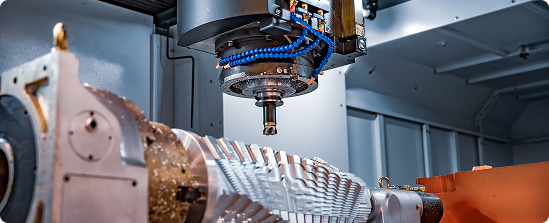
CNC programming sits at the core of modern manufacturing. From aerospace components to automotive parts, CNC programmes convert digital designs into accurately machined products.
However, without robust processes and validation, programming can quickly lead to delays, errors, and unnecessary costs.
This guide explores what CNC programming involves, why it’s essential, the different programming approaches available, and how simulation software helps manufacturers gain confidence in every programme they release.
What is CNC programming?
CNC programming is the process of creating instructions that control machine tools to cut, drill, mill or shape a component.
These instructions are typically written in G-code, defining:
-
Tool movements
-
Feed rates
-
Spindle speeds
-
Machining sequences
CNC programming effectively connects CAD designs to real-world production on the shop floor.
Across industries such as aerospace, automotive, energy, and precision engineering, its purpose remains the same:
-
Deliver consistent accuracy
-
Ensure repeatability
-
Maintain traceability
-
Improve operational efficiency
With the right tools in place, manufacturers can identify and eliminate programming errors before machining begins.
Understanding G-code
G-code is the standard language used to control CNC machines. It dictates how the machine moves, the path it follows, and the speed at which operations are performed.
Although CAM systems generate G-code automatically, understanding and validating it remains critical.
For manufacturers, verifying the exact post-processed G-code before it reaches the machine provides the highest level of confidence. This ensures that what is simulated is exactly what will be executed in production - with no assumptions or approximations.
Are you serious about precision, efficiency, and protecting your machines? Then our reveal-all G-code guide is an essential read for you.
Why CNC Programming Matters
CNC programming is not simply about running machines — it’s about ensuring they operate efficiently, safely, and consistently.
Key benefits include:
Precision and repeatability.
Manufacture parts to exact tolerances, every time.
Error and risk reduction.
Minimise human input and eliminate guesswork.
Cost effectiveness.
Lower scrap rates and fewer reworks improve profitability.
Scalability across production
Validated programmes can be reused across multiple machines and batches.
Data-driven improvement
Capture and reuse programming data to enhance future performance.
When combined with simulation, CNC programming becomes far more powerful - enabling manufacturers to test, verify and optimise processes before any material is cut.
.jpg?width=640&height=260&name=Media%20(1).jpg)
What are the different types of CNC programming?
Manual programming.
Traditional programming involves writing G-code line by line. While this offers full control, it is time-intensive and more prone to human error, particularly for complex parts.
CAM programming.
Most manufacturers now use Computer-Aided Manufacturing (CAM) software to generate toolpaths directly from CAD models. This approach improves efficiency and makes programming more accessible.
Hybrid Programming
A combination of CAM-generated code and manual edits. While useful for solving specific challenges, it can introduce risk if changes are not fully verified.
Other Approaches
-
Conversational programming: simplified, machine-based interfaces.
-
Adaptive programming: toolpaths that respond to real machining conditions.
Choosing the right Approach
The ideal method depends on part complexity, production volume, and available expertise.
For high-precision or multi-axis machining, combining CAM with advanced verification and simulation software provides the most reliable and scalable workflow.
Benefits of CNC Programming Software
Regardless of the programming method used, modern software significantly enhances performance and reliability.
Key advantages include:
Improved efficiency
Accelerate the transition from design to production.
Increased efficiency
Accelerates the design-to-production cycle.
Flexibility
Adapt quickly to design changes or customer requirements.
Consistent part quality
Ensures every part meets specification, essential for industries with strict compliance standards, or working in hybrid CNC/manual programming environments.
Reduced human error
Automated processes lower the risk of costly mistakes.
Advanced machining capabilities
Enable complex operations such as multi-axis machining, hybrid manufacturing, and intricate 3D toolpaths.
How CNC Simulation Enhances Programming?
CNC programming provides the foundation for machining — but it does not guarantee success on the shop floor.
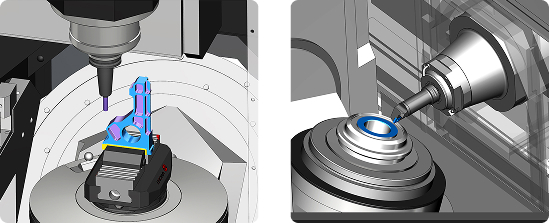
Even well-written programmes can behave differently when executed on a physical machine. CNC simulation software bridges this gap by validating programmes in a virtual environment before production begins.
With simulation, manufacturers can:
Visualise machining processes digitally
Confirm that the final part matches the intended design
Validate and compare designs.
Ensure alignment between CAD designs and machined results
Verify toolpaths
Detect collisions, over-travel, and inefficiencies
Identify errors early
Prevent wasted material, tooling damage, and downtime
Optimise machining performance
Adjust feeds, speeds, and strategies for maximum efficiency
Integrate with CAM systems
Maintain a seamless workflow across platforms
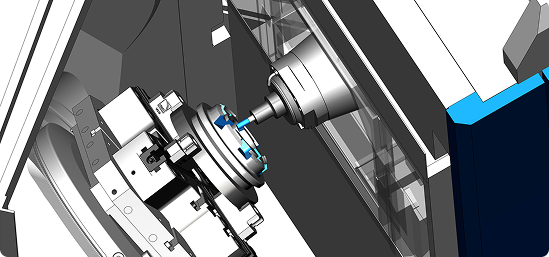
By simulating the exact G-code used in production, Vericut enables manufacturers to run programmes with confidence — knowing they have already been fully tested and validated.
-1.jpg?width=638&height=259&name=Media%20(9)-1.jpg)
Final Thoughts
CNC programming is fundamental to modern manufacturing, enabling precise, repeatable, and efficient production. However, programming alone is not enough to guarantee success.
Without proper verification, even small errors can lead to costly consequences.
By combining CAM, G-code validation, and simulation, manufacturers can transform CNC programming into a strategic advantage. Simulation not only prevents errors but also unlocks opportunities for optimisation and continuous improvement.
With a fully digital approach, you can test ideas, refine processes, and maximise machine performance - all without risk to equipment or production schedules.
Vericut plays a key role in this process by simulating real G-code on a true digital twin of your machine. The result is greater confidence, improved efficiency, and programmes that are fully ready for production.