

 English - United Kingdom
 English - United States
 한국어 - 대한민국

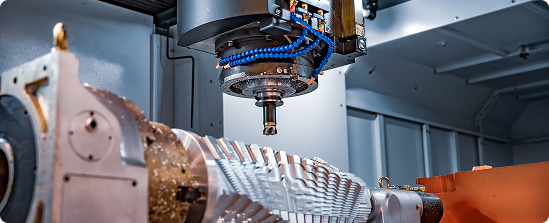
NC programming plays a critical role in modern manufacturing. From aerospace turbine components to automotive engine blocks, NC programs convert digital designs into accurately machined parts. However, without the right processes and verification methods, programming issues can lead to delays, machining errors, and unnecessary production costs.
This article explores what NC programming is, why it matters, the different programming approaches available, and how simulation software helps manufacturers improve accuracy, efficiency, and confidence before machining begins.
What is NC programming?
NC programming is the process of creating instructions that tell machine tools how to cut, drill, or mill a part. These instructions are typically written in G-code and define machine movements, feed rates, spindle speeds, and machining operations to ensure parts are produced according to exact specifications.
In manufacturing, NC programming connects CAD designs with actual production on the shop floor. Across industries such as aerospace, automotive, energy, and consumer products, the objective remains the same; delivering accuracy, repeatability, traceability, and operational efficiency throughout the machining process.
Advanced verification software such as Vericut helps manufacturers identify programming errors before machining begins, reducing the risk of costly mistakes and machine downtime.
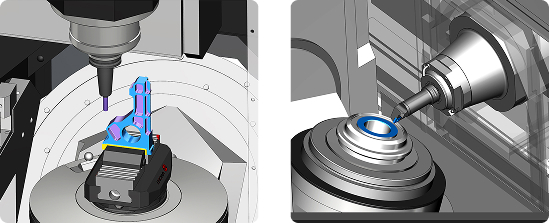
What is G-code?
G-code is the standard language used by CNC machines. It instructs the machine on how to move, what toolpath to follow, and the speed at which operations should be performed.
Although CAM software can automatically generate G-code, understanding its purpose remains important for reviewing, modifying, and troubleshooting NC programs.
For manufacturers, verifying the actual post-processed G-code before it reaches the machine is essential. G-code level simulation provides the highest level of confidence by ensuring the program behaves exactly as intended in a real machining environment.
If precision, efficiency, and machine protection matter to your operation, our comprehensive G-code guide is a must-read.
Why is NC Programming Important?
NC programming is not only about operating a machine, it enables manufacturers to run machining operation safely, consistently, and efficiently.
Precision and repeatability.
NC programming ensures parts are manufactured to exact tolerances repeatedly across multiple production cycles.
Reduced Error and Risk.
Automated programming minimizes manual intervention and reduces the likelihood of human error, machine crashes, and scrap.
Improved Cost Efficiency.
Fewer machining mistakes, reduced rework, and lower material waste contribute to significant cost savings.
Scalable Shop Floor Operations.
Once validated, NC programs can be deployed confidently across multiple machines and production runs.
Better Data Visibility and Process Control.
Programming data can be stored, analyzed, and reused to support future projects and continuous process improvement.
For users of Vericut, NC programming extends beyond nasic code creation. The software allows manufacturers to simulate, verify, and optimize toolpaths and machine behaviors before cutting material, helping save time, reduce waste, and improve machining confidence.
.jpg?width=640&height=260&name=Media%20(1).jpg)
What are the Different Types of NC Programming?
Manual NC programming.
Manual NC programming is the traditional approach, where programmers write G-code line by line. While this method offers maximum control over machine movements and machining logic, it is highly time-consuming and more susceptible to human error. As part complexity and production demands increase, manual programming becomes less practical for modern manufacturing environments.
CAM NC programming.
Today, most manufacturers now rely on Computer-Aided Manufacturing (CAM) software to generate NC programs. CAM systems convert CAD models into machine-ready toolpaths, significantly improving programming efficiency, and reducing manual effort.
CAM software also lowers the learning curve for less experienced programmers while enabling manufacturers to handle increasingly complex machining operations with greater speed and consistency.
Hybrid CAM/Manual NC Programming
Hybrid programming combines CAM-generated toolpaths with manual G-code modifications. This approach is often used when programmers need to overcome specific machining challenges or fine-tune operations beyond what the CAM system can generate automatically.
Other NC Programming Methods
-
Conversational Programming: uses simplified interfaces that allow operators to create programs directly at the machine, making it suitable for simpler jobs and shop floor adjustments.
-
Adaptive Programming: enables toolpaths to respond dynamically to real machining conditions, helping improve cutting performance and process reliability.
Choosing the Right NC Programming Method
The best NC programming approach depends on factors such as part complexity, production volume, machine capability, and available programming expertise.
For high-precision, multi-axis, or multi-process machining, CAM programming combined with advanced simulation and verification software such as Vericut provides one of the most reliable and efficient workflows available.
What are the Benefits of Using NC Programming Software?
Regardless of whether manufacturers use manual, CAM, or hybrid programming methods, the right software significantly improves productivity, accuracy, and process control.
Modern NC programming software transforms programming from a manual task into a strategic manufacturing advantage.
Automation and Accuracy.
Programming software reduces manual coding requirements while improving machining precision and consistency.
Increased efficiency.
Automated workflows accelerate the transition from design to production, reducing lead times and improving throughput.
Greater Flexibility.
Programming changes can be implemented quickly to accommodate customer revisions, design updates, or production adjustments without disrupting the entire workflow.
Improved Parts Consistency.
Consistent programming ensures parts repeatedly meet specification requirements, which is especially important in industries with strict compliance standards or hybrid programming environments.
Reduced human error.
Automated toolpath generation and verification help minimize costly mistakes, machine crashes, and material waste.
Advanced Machining Capabilities.
Modern CNC programming software supports sophisticated machining operations including multi-axis milling, Swiss-style machining, hybrid manufacturing systems, and advanced 4D toolpaths..
How Does CNC Simulation Improve NC Programming?
NC Programming and G-code form the foundation of machining operations, but programming alone does not guarantee successful production.
Even carefully written programs can produce unexpected issues when executed on a real machine. CNC simulation software bridges this gap by validating programs in a virtual environment before machining begins.
Visualize Machining Before Cutting Material.
Simulation software allows manufacturers to see exactly how a program will perform in a digital environment, helping identify issues before they reach the shop floor while also capturing valuable production analytic.
Validate and Compare Designs.
Simulation verifies consistency between CAD models, CAM toolpaths, and the final machined result, improving confidence in production readiness.
Verify toolpaths.
Potential collisions, over-travel conditions, and inefficient machine movement can be identified and eliminated before machining starts.
Detecting Errors Early.
Programming mistakes that could otherwise cause collisions, machine downtime, or tooling damage are detected during simulation instead of during production.
Optimize Machining Processes.
Manufacturers can adjust optimal feeds, speeds, cutting strategies, and machining conditions to maximize performance and efficiency for specific materials and geometries.
Seamlessly CAM Integration.
Simulation software integrates with leading CAM systems, allowing manufacturers to verify toolpaths within a streamlined workflow.
By simulating the exact G-code that run on the machine, Vericut gives manufacturers greater confidence that NC programs will perform safely, accurately, and efficiently without unnecessary production risk.
-1.jpg?width=638&height=259&name=Media%20(9)-1.jpg)
Closing Thoughts.
NC programming is the backbone of modern manufacturing, enabling companies to produce complex parts with precision, speed and repeatability. However, programming alone is not enough. Without proper verification, even well-designed toolpaths can result in costly errors, wasted material, machine downtime, or damaged tooling.
By combining CAM software, G-code verification, and CNC simulation, manufacturers can turn NC programming into a true competitive advantage. Simulation software not only prevents errors, it also provides the confidence to optimize processes, test new machining strategies, and maximize machine performance within a safe virtual environment.
This is where Vericut delivers exceptional value. By simulating actual G-code on a digital twin of the machine, Vericut helps ensure every NC program released to production is safe, accurate, efficient, and ready for the shop floor.
-1.jpg)