
 한국어 - 대한민국

By Scott Ravenscroft - Vericut Area Sales Manager - UK and Emerging Markets
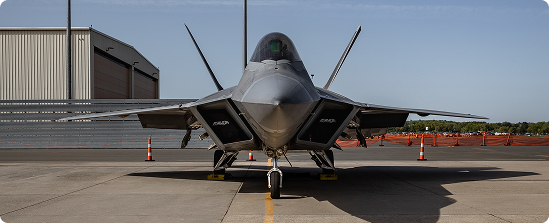
There is no shortage of demand in defence manufacturing. What is in short supply is the ability to deliver.
As governments across Europe, Asia, and North America ramp up spending as part of their defence industrial strategies, many manufacturers, especially small and mid-sized suppliers, are under pressure from all directions at once. And this is not a short-term surge - the pressure is structural.
This demand does not just pose a machining challenge. It presents a capacity and credibility challenge.

The pressure is structural.
When I speak to customers, I hear the same defence challenges repeatedly.
They are being asked to produce complex components from exotic materials like titanium and Inconel, with tighter tolerances and shrinking delivery windows.
They’re doing it under exacting contracts where traceability and compliance are non-negotiable. And at the same time, geopolitical uncertainty is affecting supply chains and sourcing decisions.
Plus, they’re trying to do all of that with a workforce that is stretched thin.
Applications in the defence industry have always been demanding. What’s changed is the scale of that demand, the complexity of the work, the consequences of disruption, and the economics of the global defence industry as a whole.
The global defence industry: a sprawling jigsaw puzzle.
I recently described the defence sector as a sprawling jigsaw puzzle because it’s not a single problem.
It’s formed of many competing constraints that all have to stay aligned, and when one piece shifts, the rest feel it.
A new revision introduces programming changes. Changes introduce prove-out risk. Prove-out risk increases machine downtime. Downtime affects delivery schedules. Delivery pressure encourages shortcuts, which increase the risk of collisions and errors.
For the global defence industry, that cycle compounds quickly.
What’s interesting is that the manufacturers navigating this well are not always the largest or best-funded. They are the ones investing in process discipline and risk reduction at the machining level.

Addressing the challenges in the defence industry: efficiency isn’t the sole objective.
In automotive manufacturing, simulation and optimisation are often discussed in terms of throughput and cost per part.
In defence CNC machining, the conversation is different. It is less about squeezing seconds out of a cycle, and more about reducing existential risk.
When you are machining a low-volume, high-value component from a costly material, you cannot afford to discover a gouge at the machine. And when skilled labour is constrained, you cannot afford workflows built on informal checks or extended manual prove-outs.
Add in strict contract requirements for traceability, and the need becomes clear: defence manufacturers need certainty before production begins.
That is why CNC simulation tools like Vericut become infrastructure in this context.
They allow manufacturers closely following the defence industrial plan to analyse real NC programs before cutting, identify collisions and over-travel conditions, and validate setups digitally rather than on a live machine.
They also support controlled comparison workflows. Using AUTO-DIFF™, teams can confirm that the programmed geometry matches the intended design revision before machining begins.
In an environment where files move between OEMs, primes, and subcontractors, that extra layer of validation protects more than the part; it protects credibility.
The goal here is not merely efficiency. It’s a predictable, repeatable output.
Unlocking more CNC machine capacity from what you have.
One of the most common assumptions in a growth environment is that capacity equals equipment. When demand increases, the instinct is to add machines or expand facilities.
That is not always realistic. Capital investment takes time, and facility expansion takes planning.
Fortunately, there is another path.
By reducing machine crashes, shortening prove-out time, optimising cutting strategies, and stabilising programs, manufacturers can often generate meaningful additional capacity from the machines they already own.
Tools like Vericut Force Optimisation, along with our standalone Vericut Optimizer module, analyse cutting conditions and adjust feeds and speeds based on real tool engagement and machine behaviour. The result is not simply faster cutting, but more controlled cutting.
Programs can be tuned to reduce excess air cutting, balance tool load, and maintain consistent chip thickness without introducing vibration or instability.
For global industrial defence applications, that balance matters. Faster is only valuable if it is repeatable. An aggressive strategy that introduces variability in tool life or surface integrity does not solve a capacity problem - it just creates a new one.
The manufacturers growing successfully are not necessarily running their machines harder. They are running them more predictably, with a clearer understanding of what their programs are actually doing.
Compliance is part of production.
Another defining shift in defence manufacturing is the increasing weight of compliance and documentation. Defence CNC machining customers want evidence that processes are controlled, that changes are tracked, and that verification is not informal.
That expectation changes how machining teams operate.
When simulation is embedded in the workflow, it creates a record. It supports traceability. It demonstrates that programs were analysed and validated before production. That documentation strengthens audits and builds confidence with primes and government stakeholders.
This is not about marketing claims. It is about process credibility. And the more complex the part and the contract are, the more important credibility becomes
Growing despite the constraints.
Whilst the landscape is intense, many defence manufacturers are adapting effectively.
They are analysing machining performance more closely, optimising programs to generate meaningful capacity gains, and making intentional, data-driven decisions to reduce risk, and improve repeatability. Our recent Defence Mission Files further prove this point -
you can read them here.
What really stands out to me is that the companies treating simulation, optimisation, and process discipline as infrastructure, rather than optional extras, are the ones starting to overcome the constraints.
Because the true defence challenge isn’t demand. It’s the ability to convert it into stable, repeatable, and traceable production.
And for many manufacturers, the solution begins not with adding more equipment, but with strengthening the processes that already sit at the centre of their operation.

About the Author
Scott Ravenscroft is Sales Manager at Vericut UK, where he works with defence manufacturers and precision engineering companies to improve CNC machining performance, process reliability, and production efficiency. With extensive experience in advanced manufacturing technologies, Scott specialises in helping organisations implement simulation, verification, and optimisation solutions that support the production of complex, high-value components while reducing machining risk, minimising downtime, and improving quality assurance.
Throughout his career, Scott has developed a strong understanding of the challenges facing defence manufacturing, including strict compliance requirements, demanding production tolerances, and the need for consistent operational efficiency across critical supply chains. He regularly collaborates with engineering and production teams to identify practical ways to streamline machining workflows, enhance manufacturing capability, and maximise the value of advanced machining technology investments within the defence sector.