
 English - Singapore
 English - United States
 日本語 - 日本
 한국어 - 대한민국

What CNC capacity really means
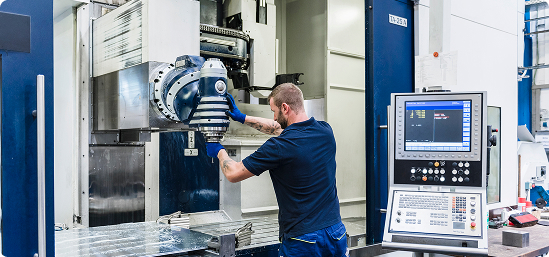
CNC machine capacity refers to the maximum amount of work your machines can process within a given timeframe. This may be measured in different ways, such as parts produced per hour or the number of productive cutting hours achieved each day.
Capacity plays a central role in determining production speed, manufacturing costs, and overall operational efficiency. In simple terms, higher capacity allows more work to be completed in less time — supporting improved margins and profitability.
Capacity vs. Efficiency
Increasing capacity can help remove production bottlenecks, but it must be balanced carefully.
While the goal is always to keep machines running productively, pushing critical equipment beyond its limits can actually reduce throughput — particularly when parts queue up waiting for availability. Sustainable capacity improvements rely on smarter processes, not just longer run times.
What happens if CNC machine capacity is insufficient?
When workload exceeds available capacity, lead times can quickly spiral. Jobs back up, delivery schedules slip, and teams are often forced into rushed or reactive working patterns.
Limited CNC capacity frequently leads to overtime, increased wear on machines, and higher part costs — all of which erode profitability and reliability.
What Causes Capacity Constraints?
Several factors can limit how much work a CNC machine can realistically handle, including:
- Spindle power, torque, and maximum speed
- Machine stability at high cutting rates
- The capability and sophistication of machine controls
- Physical machine envelope and travel limits
- Tool magazine capacity and reload frequency
- Long or inefficient setup times
Machining Capacity at the Limit? Alternatives to Buying New Machines
Adding new machine tools is a major investment — not just financially, but also in terms of floor space, installation time, and staffing requirements. New machines must run consistently to justify their cost, and may require additional operators or support resources.
Before committing to expansion, it’s often more effective to focus on optimising existing processes. Intelligent software, improved tooling, and refined workflows can unlock hidden capacity and raise throughput without purchasing additional equipment.
Vericut provides a range of optimisation and simulation solutions designed to improve workflows and maximise the performance of your current machines.
Optimising Capacity with Software
Virtual process verification
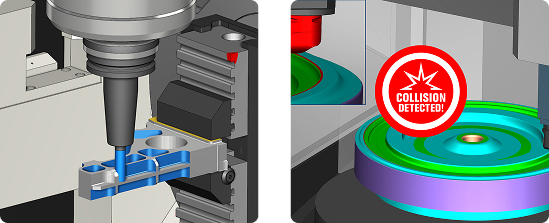
CNC simulation software, such as Vericut enables machines and NC programs to be tested in a virtual environment before machining begins.
This digital twin approach allows engineers to prove processes, detect errors, and resolve setup issues without occupying valuable machine time. Digital prove-outs are faster, safer, and help keep machines available for productive cutting rather than testing.
Collision detection
Machine crashes are disruptive, expensive, and a direct drain on capacity. Any collision or axis overtravel brings production to a halt and consumes time and resources.
Vericut identifies potential issues across the entire machine envelope, preventing real-world incidents. By ensuring programs run correctly the first time, capacity is preserved for production — not recovery.
Toolpath optimisation
While Vericut Verification focuses on preventing problems, Vericut Force enhances machining performance.
Advanced optimisation software figures out the best feed rates and toolpath for peak efficiency. With Force, you can perfect your feed rates, chip load, and surface finish for smooth, consistent production and reduced cycle times.
Force users can find 25% savings on their cycle times and double the tool life, giving you back precious machine capacity.
While Vericut Verification focuses on preventing problems, Vericut Force enhances machining performance.
Advanced optimisation analyses the actual cutting process to determine optimal feed rates and tool engagement. Force refines chip load, surface finish, and cutting forces to deliver smoother machining and shorter cycle times.
Users commonly achieve cycle time reductions of up to 25% and significantly extend tool life — directly freeing up machine capacity.
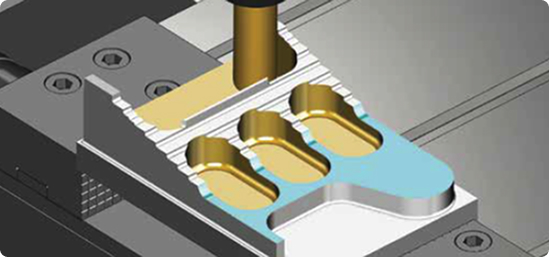
Crucially, vericut connects individual operations across the full machining process, providing a holistic view that helps manufacturers uncover hidden inefficiencies.
With detailed analytics in place, engineers can adjust toolpaths and strategies in near real time, keeping spindles cutting for longer.
Additional Benefits of Virtual Planning
- Idle spindle time
- Production bottlenecks
- Inefficient tool changes
- Cut-by-cut performance issues
Other ways to optimise capacity
Machine optimisation
There are many opportunities to enhance milling, drilling, and turning processes to reduce wasted capacity.
When applied correctly, high-feed and high-speed milling strategies can significantly shorten roughing cycles. In turning applications, enabling Constant Surface Speed (CSS) helps maintain optimal cutting conditions as diameters change, improving efficiency and consistency.
The most effective optimisation strategies depend on the parts being produced and the materials involved.
Tooling & fixturing optimisation
Selecting the right cutting tools and fixtures can make a substantial difference to productivity.
High-performance tooling designed for specific materials often delivers longer tool life and higher cutting speeds. In some cases, multi-purpose tools can reduce tool changes and free up magazine space.
Fixturing also plays a critical role. Manufacturers adopting fast-change solutions such as zero-point clamping systems can dramatically reduce setup times, allowing more hours for machining.
Vericut’s advanced simulation capabilities can highlight opportunities to improve tool and fixture choices, helping manufacturers extract maximum value from their equipment.
Conclusion:
Before investing in the cost and complexity of additional machine tools, it’s worth assessing how much more performance your current setup can deliver.
Vericut’s simulation and optimisation technologies help manufacturers unlock hidden CNC capacity, reduce cycle times, and improve part quality — without adding new hardware.
Investing in vericut means making smarter use of the machines you already own, providing a practical and cost-effective path to increased productivity.
Talk to us about increasing your CNC machining capacity.