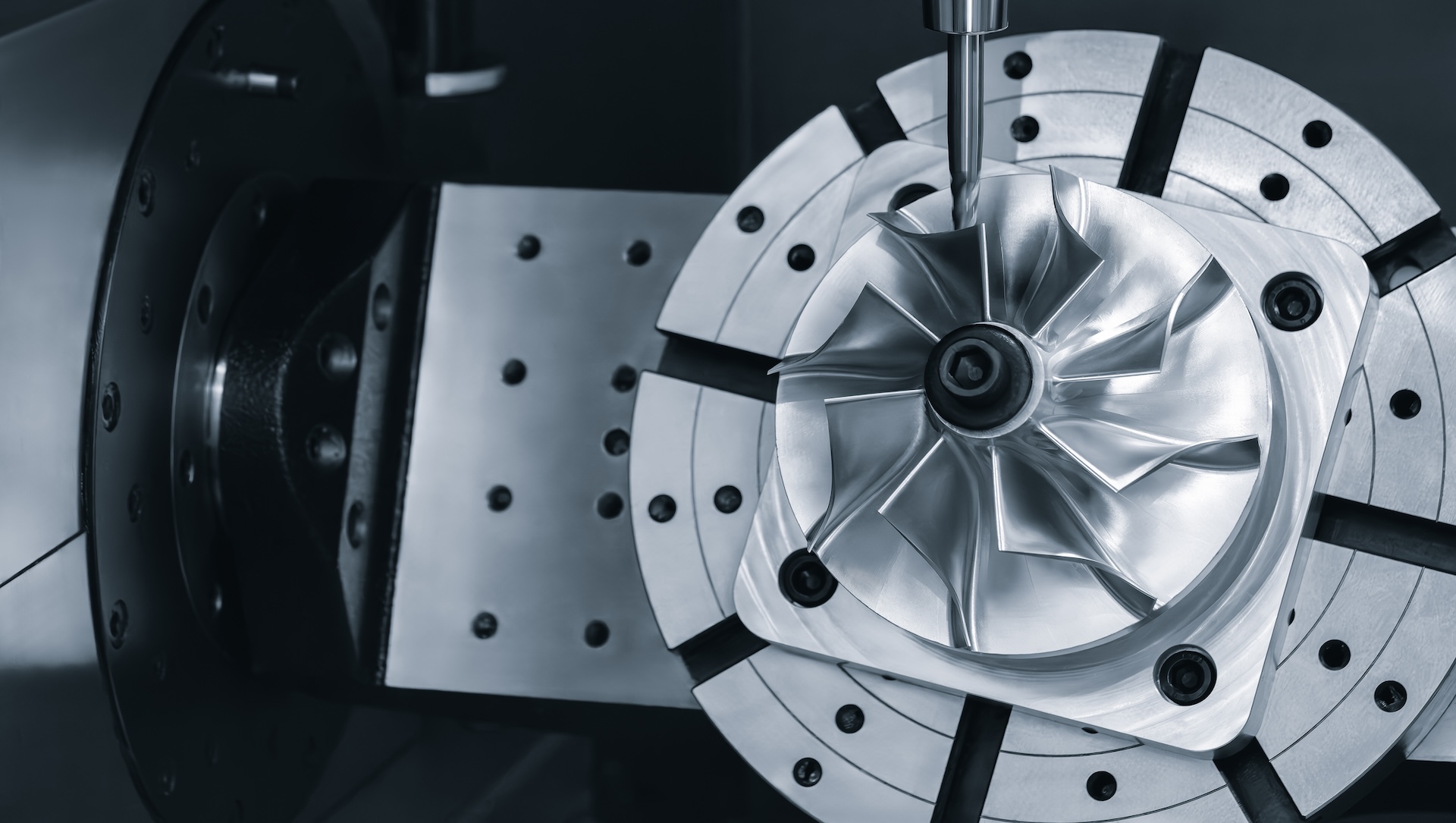
Thin walls, complex geometries, long cycle times, tight tolerances, and expensive materials create a machining environment where small mistakes become major setbacks.
That is why aerospace manufacturers use CNC simulation software for aerospace.
Vericut verifies the exact NC code you plan to run on the machine, so you can identify collisions, over-travels, gouges, and process issues before they reach the shop floor.
.png?width=70&height=70&name=Brand%20Icons%20-%20light%20(10).png)
Aerospace machining often relies on advanced 5-axis motion, tight clearances, and intricate workholding. The more degrees of freedom you introduce, the smaller the margin for error becomes.
-1.svg)
Aerospace components frequently require extended run times and expensive stock. If a program fails late in the cycle, the cost is measured in more than scrap. It is time, capacity, and schedule confidence.
.png?width=70&height=70&name=Brand%20Icons%20-%20light%20(11).png)
Aerospace manufacturing is built around repeatability, traceability, and quality discipline. For many parts, the standard is simple: right the first time, every time.
-1.svg)
Titanium, nickel-based alloys, and hardened steels are standard in aerospace CNC machining. These materials demand careful tool engagement, controlled cutting forces, and stable machining conditions to protect tools and part quality.
Aerospace parts demand zero-defect manufacturing. That is not a slogan. It is the reality of producing components that must perform consistently, under load, and over time.
Vericut is built for that reality. It verifies the actual NC code you will run, not theoretical toolpaths. That means the behavior you validate in simulation precisely aligns with what the machine will do in production.
For aerospace OEMs and Tier 1 suppliers, this approach reduces risk before parts ever reach the machine, supports first-article confidence, and shortens prove-outs without sacrificing control or quality discipline.

We completely trust Vericut. When manufacturing high-value components for such critical applications, we need to have confidence that we’re using the very best tools for the job, and Vericut always delivers.

Such as ribs, spars, bulkheads, and large frame elements, machining frequently involves long-reach tooling, thin-wall features, and tight work envelopes.
These programs require careful verification to avoid gouges, fixture conflicts, or unexpected axis limits deep into a cycle.
.png?width=698&height=465&name=Media%20(26).png)
.png?width=698&height=465&name=Media%20(27).png)
Aerospace manufacturers face difficult materials, aggressive cutting conditions, and highly controlled tolerances.
Vericut helps validate complex tool motion and improve cutting stability, supporting safer machining of turbine housings, blisks, and other critical rotating components.
Where clearance conditions are tight and multi-axis positioning is common.
By simulating the complete machining environment, including tooling, holders, fixtures, and machine behavior, teams can ensure every move is proven before the part reaches the spindle.
.png?width=698&height=465&name=Media%20(28).png)
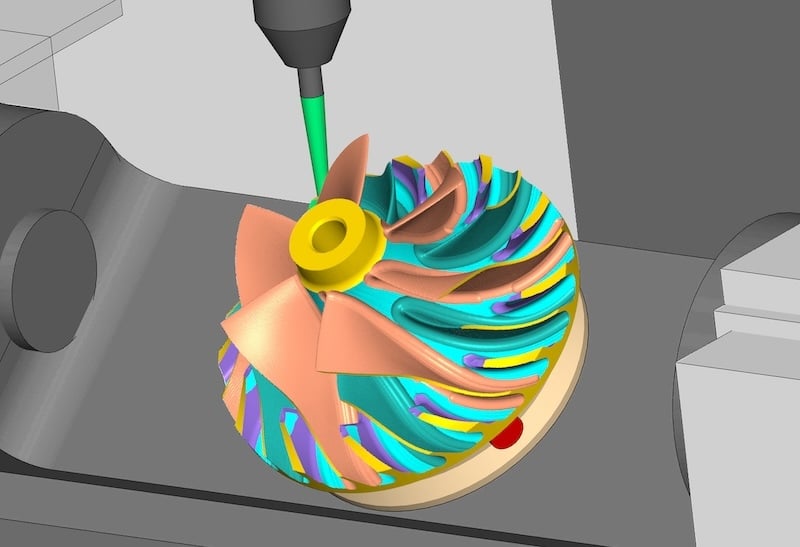
Vericut provides an essential layer of process confidence.
Long cycle times, complex setups, and multi-axis kinematics make it critical to identify problems early, reduce prove-out time, and maintain consistency from first article through production.

See how Vericut CNC simulation software can help your business forgo its CNC machining frustrations.
Address:
Vericut USA
CGTech Corporate Headquarters
9000 Research Drive
Irvine, California
92618-4214
Phone:
(949) 753-1050


 English - United Kingdom
 日本語 - 日本
 한국어 - 대한민국