  • vi icon
  • You make it, we simulate it.

    Book your free demo today.
    Hero image

    CNC Simulation Software for Machinery and Tooling Manufacturing

    Machinery and tooling manufacturing depend on precision, consistency and controlled machining processes.

     Machinery and tooling manufacturing depend on precision, consistency and controlled machining processes.

    Whether producing cutting tools, tooling assemblies, machine tool components or complex machinery parts, success depends on how reliably CNC programmes perform when they reach the machine tool.

    In many manufacturing environments, CNC programmes are still proven through manual intervention, test cuts and incremental adjustments. However, as component geometries become more complex and delivery times become tighter, relying on the machine tool to uncover problems can be costly and inefficient.

    Vericut provides a more controlled approach. By verifying the actual NC programme before machining begins, cutting tool manufacturers, machine tool manufacturers and machinery manufacturers can identify potential problems, analyse machining performance and optimise CNC processes before material reaches the spindle.

    This helps move machining from a manual, reactive process towards a more predictable and controlled workflow.
    Tooling-3
    Frame 48095663 (16)

    High-precision tooling and component geometry

    Tooling components are often small, intricate and highly sensitive to dimensional variation.

    Relief angles, flute profiles, insert seats, contact surfaces and other functional geometries can all influence the performance of the finished cutting tool or tooling assembly.

    When tolerances are tight and component geometry is critical to performance, relying on manual prove-outs to identify problems can be an expensive way to validate a CNC programme.

    Frame 48095663 (17)

    Costly design and machining errors.

    In machinery manufacturing and tooling manufacturing, a single mistake can affect more than one programme or component.

    Tool design errors, gouges, clearance problems and unexpected machine behaviour can result in scrap, rework, damaged tooling and lost machine capacity.

    For cutting tool manufacturers in particular, these costs can quickly accumulate during the development and production of precision tooling.

    Frame 48095663 (21)

    Complex CNC machine kinematics

    Machine tool manufacturing and machinery CNC operations often involve complex multi-axis movement, rotary configurations, special heads, sub-spindles, turrets and gantry-style machine behaviour.

    Reviewing only the theoretical toolpath is not always enough. The complete machine movement and interaction between the cutting tool, workpiece, fixtures and machine must be verified.

    Frame 48095663 (22)

    Pressure to achieve right-first-time production

    Tooling manufacturers and machining tooling developers are under constant pressure to produce accurate components quickly.

    Repeated manual trial and error can slow development, occupy valuable machine time and introduce avoidable uncertainty into a process that could be controlled earlier through CNC simulation and verification.

    Why CNC simulation matters for cutting tool manufacturers

    In the machinery and tooling industry, the cost of a machining error is rarely limited to a single component.

    A problem affecting a cutting tool, tool holder, insert seat, spindle component or tooling assembly can influence downstream machining performance, surface finish, tool life and delivery schedules.

    That makes CNC verification particularly important in tooling and machinery manufacturing, where accuracy is often required across complex geometries, tight tolerances and demanding machine movements.

    CNC programmes need to run safely and repeatably without relying on manual prove-outs to identify problems that could have been detected earlier in the process.

    Vericut provides manufacturers with a controlled way to validate the machining process before production begins. It verifies real machine logic and G-code, simulates complete machine movement and helps manufacturing teams understand how the CNC programme will behave before it reaches the machine tool.

    Vericut also supports optimisation and comparison workflows that are particularly valuable in the tooling industry, where geometry, surface finish and cutting performance all have a direct impact on the final product.

    For cutting tool manufacturers, machine tool manufacturing teams and wider machinery manufacturing operations, Vericut supports a more predictable route from CNC programme creation to finished component.
    Tooling-4

    Benefits of CNC simulation for the machinery and tooling industry

    Machine tool manufacturing combines exacting geometry with demanding performance expectations.

    The machining process must support both. Vericut helps manufacturers introduce greater control into the process by validating programmes, machine movement and machining conditions before production begins.

    01.

    Improve accuracy across tooling components.

    Vericut helps manufacturing teams validate the complete NC programme before release, reducing the risk of collisions, gouges, over-travel conditions and unexpected leftover material.

    In tooling manufacturing, even small deviations can influence the performance of the finished component.

    Vericut's collision checking examines the complete path of travel, while full G-code verification helps ensure that the simulated machining process reflects the behaviour of the physical CNC machine.

    02.

    Optimise machining tooling performance

    Vericut Force and Vericut Optimizer support controlled feed-rate optimisation based on actual cutter and material contact, as well as machine behaviour.

    This helps cutting tool manufacturers improve machining performance without introducing unnecessary instability into the process.

    Vericut Force can optimise NC programmes, whether they are new or existing, by analysing tool and material contact and adjusting feed rates to support more effective cutting conditions.

    03.

    Improve cutting tool life and surface finish

    Optimised feed rates and controlled chip thickness can deliver more than faster machining.

    Stable cutting conditions can also support improved surface quality, greater repeatability and longer cutting tool life.

    For manufacturers operating in the machinery and tooling industry, this can help improve the consistency of finished components while reducing unnecessary tool wear.

    04.

    Reduce development and production costs

    Manual prove-outs, crashed tools, scrapped components and repeated set-up iterations all increase the cost of CNC machining.

    Vericut helps manufacturers identify potential problems before they reach the machine tool, reducing reliance on manual prove-outs and supporting greater efficiency throughout both tooling development and production.

    05.

    Strengthen control over design revisions

    Tooling designs and machining programmes can change frequently during development and production.

    AUTO-DIFF™ supports comparison between CAD design models and Vericut simulation results, helping teams identify geometry differences, weaknesses and potential errors before machining begins.

    For tooling components where relatively small geometry changes can have a significant downstream effect, this additional validation can help reduce the risk of expensive rework.

    When running Vericut Force Optimization, we saw a 15% reduction in energy consumption, and a 12% cycle time reduction for drill bodies.

    Media-1
    Björn Ljunggren
    Production Engineer - Sandvik Coromant

    Applications in the machinery and tooling industry.

    Machinery and machine tool manufacturing covers a broad range of precision components and production processes.

    However, the underlying requirement remains consistent: the CNC programme needs to be verified before the machine tool is asked to prove it.

    Cutting tools and tooling components.

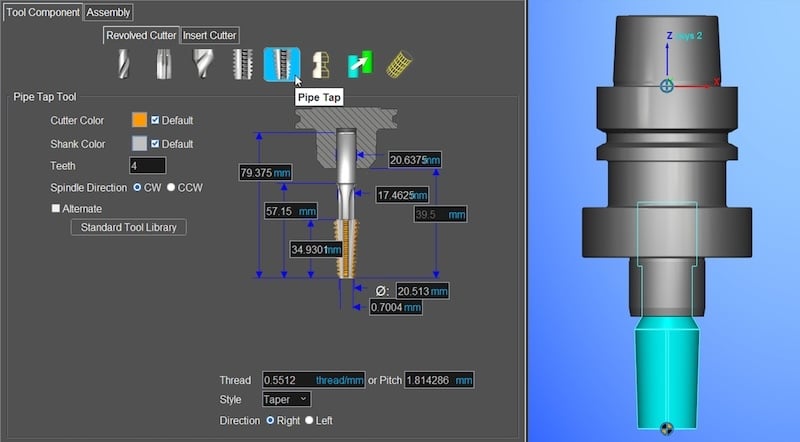
    Cutting tools, holders, collets, adapters, inserts and supporting tooling components all depend on highly controlled geometry and reliable machining processes.

    Vericut helps manufacturers validate the toolpath, machine movement and set-up conditions that influence the quality and performance of the finished tooling component.
    Media - 2026-07-06T093914.581
    Media - 2026-07-06T094052.938

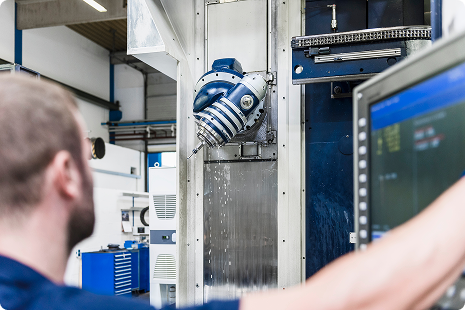
    Machine tool manufacturing.

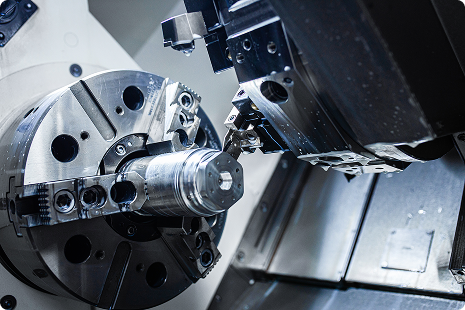
    Machine tool manufacturing involves high-precision structural and moving components that depend on accurate machining and reliable assembly interfaces.

    Vericut supports these workflows by simulating real CNC machine behaviour, helping manufacturing teams verify programmes before release and reduce avoidable disruption during production.

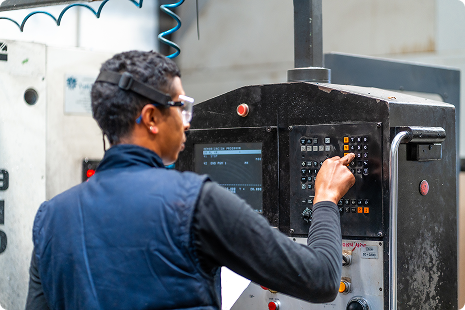
    Machining tooling development.

    When new tooling is being developed or an existing design is being refined, repeated trial-and-error machining can be costly.

    Vericut enables cutting tool manufacturers to review and optimise machining tooling strategies digitally before production, reducing the amount of machine time required for programme validation.
    Media - 2026-07-06T094216.481
    Media - 2026-07-06T094308.224

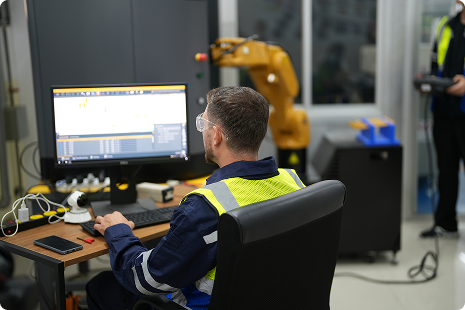
    Complex machinery CNC processes.


    Machinery CNC operations can include multi-axis systems, rotary axes, sub-spindles, turrets and gantry machines.

    Vericut is designed to simulate complex CNC applications, including multi-channel mill-turn machining and advanced machine configurations, helping manufacturers verify complete machine movement before production begins.

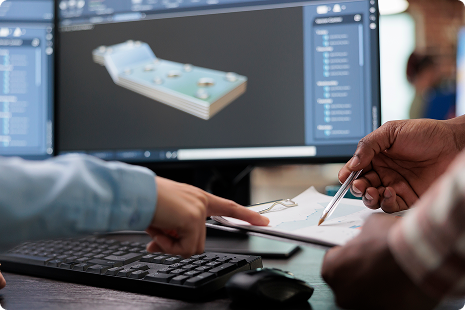
    CNC programme comparison and geometry verification.


    Where tooling designs change frequently or CAD/CAM handoffs are complex, AUTO-DIFF™ provides a structured way to compare design intent with the simulated machining result.

    This helps manufacturing teams identify geometry differences and potential issues before production begins.
    Media - 2026-07-06T094501.766
    Machinery and Tooling

    Machinery and Tooling Industry FAQs.

    01.
    Can Vericut improve accuracy for cutting tools and machining tooling?

    Yes. Vericut validates the actual NC programme before machining begins, helping cutting tool manufacturers identify potential collisions, gouges, over-travel conditions and set-up issues before they affect cutting tools or tooling components.


    02.
    Is Vericut suitable for machine tool manufacturing and machinery CNC processes?

    Yes. Vericut is designed to simulate complete CNC machine behaviour, including complex applications such as multi-channel programming, mill-turn machining and advanced machine movements.

    03.
    How does Vericut prevent machining errors in tooling components?

    Vericut simulates the actual machine, tooling, fixtures and NC logic before cutting begins.

    This allows machinery CNC teams to identify potential collisions, leftover material and other process issues digitally rather than discovering them during machining.

    04.
    What are the benefits of CNC simulation for cutting tool manufacturers?

    CNC simulation can help cutting tool manufacturers reduce manual prove-outs, improve confidence in first-part production, validate programmes involving geometry-critical components and improve consistency across machining workflows.

    Vericut also supports optimisation and comparison workflows, which are particularly relevant where tool performance, geometry and surface finish are important.


    05.
    Does Vericut simulate full CNC machine kinematics?

    Yes. Vericut verifies complete machine logic and G-code and supports complex machine configurations, including rotary axes, sub-spindles, turrets, gantries and multi-channel applications.

    06.
    Can Vericut detect collisions involving fixtures, turrets, machine heads, tooling and workholding?

    Yes. Vericut's collision checking evaluates the complete path of machine movement to identify potential collisions and close-clearance situations before the CNC programme reaches the machine tool.

    07.
    Can real tooling holders, collets, shrink tooling and custom adapters be modelled?

    Yes. Vericut is designed to simulate the real CNC machine environment, including tooling and set-up conditions, helping manufacturing teams validate how the complete machining process will behave before cutting begins.

    Explore more Vericut products.

    Vericut Verification

    Detect errors, eliminate collisions and say goodbye to manual prove-outs once and for all.

    Vericut Force

    Optimise your tool paths and enhance your NC programs for the fastest, most efficient machines, ever.

    AUTO-DIFF™

    Compare CAD design modules to Vericut simulations and detect design differences and weaknesses.

    Multi-Axis

    Verify complex multi-axis machine applications and check for errors at the workpiece and the tool.

    Machine Connectivity & Monitoring

    Create and manage your most accurate digital twins ever by leveraging CNC machine data from your shop floor.

    Brand Icons - light

    Request a demo today.

    See how Vericut CNC simulation software can help your business forgo its CNC machining frustrations.  

    Address:

    Vericut UK
    Curtis House, 34 Third Avenue,
    Hove, East Sussex, BN3 2PD

    Phone:
    +44 (0)1273-773538