  • verticut intelligence icon
  • You make it, we simulate it.

    Book your free demo today.
    Hero image

    applications:

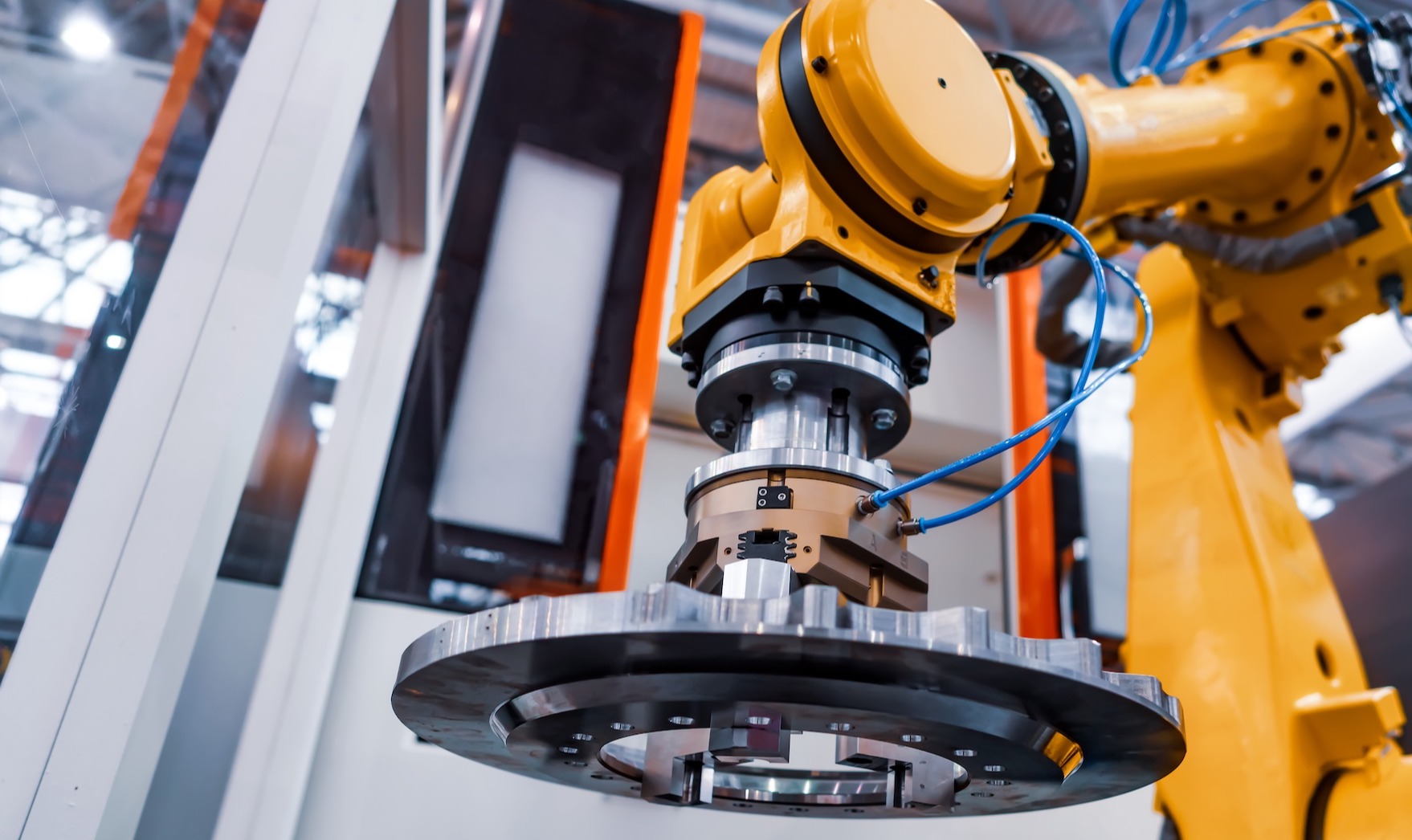
    Vericut Icam Industrial Robot Programming Software for Robotic Machining.

    Industrial robots are becoming increasingly commonplace in drilling, milling, trimming, routing and machining applications across aerospace, composites, automotive, and advanced manufacturing.

    But programming robots for manufacturing is not the same as programming traditional CNC machines.

    Icam Post Adaptive Post-Processing for robots helps manufacturers convert CAM output into robot-specific programs while accounting for robot kinematics, reach, joint limits, tool orientation, and manufacturing requirements.

    The result is a more connected robot programming workflow that helps reduce manual code editing, shorten programming cycles and improve confidence before programs reach the robot cell.

    The smart way to program industrial robots for machining.

    Robotic machining programs need to reflect more than the toolpath.

    They need to account for how the robot will move, how the tool will approach the part, how the robot cell is configured, and how the program will behave in a real manufacturing environment.

    For manufacturers using robots in machining applications, Icam Post provides a practical way to move from CAM programming to robot-ready output with fewer disconnected steps.

    Media (44)
    Media (45)

    Icam Post Adaptive Post-Processing supports manufacturers by helping them:

    • Generate robot programs directly from CAM toolpath data.

    • Reduce manual robot code editing.

    • Support robotic drilling, milling, trimming, routing, and composite machining.

    • Account for robot kinematics, joint movement, and tool orientation.

    • Prepare robot programs for supported industrial robot platforms.

    • Improve offline robot programming workflows.

    • Reduce repeated programming and prove-out loops.

    • Support more consistent programming across robots and CNC machines.

    How Icam Post robotic
    programming works.

    Icam Post robotic programming software uses CAM system data to create robot-specific programs for manufacturing applications.

    Step 1.

    Import CAM data

    The system acquires toolpath definition, tool assembly, and tool compensation data from the CAM system.

    Step 2.

    Generate robot-specific code

    Icam Post creates code for supported industrial robot platforms, accounting for robot behavior, joints, axes, and manufacturing requirements.

    Step 3.

    Simulate robot movement

    Integrated machine simulation helps validate robot motion before production, including tool movement, robot posture, and potential interference.

    Step 4.

    Optimize the program

    Robot movement can be optimized during post-processing to reduce wasted motion, improve process efficiency, and eliminate unnecessary air cuts where applicable.

    Step 5.

    Prepare for production

    The final robot program can be delivered with greater confidence that motion, reach, orientation, and machine behavior have been considered before shop-floor execution.

    Benefits of Icam Post robot programming software.

    check-circle-2--checkmark-addition-circle-success-check-validation-add-form-tick (1)

    Reduce robot programming time

    Generate robot-specific code automatically from CAM system data, reducing the need for manual code editing.
    check-circle-2--checkmark-addition-circle-success-check-validation-add-form-tick (1)

    Improve process reliability

    Validate robot motion before production to help identify reach, joint, collision and movement issues earlier.
    check-circle-2--checkmark-addition-circle-success-check-validation-add-form-tick (1)

    Minimize robot collisions

    Simulate the robot, tool, part, fixture and surrounding equipment before the program reaches the shop floor.
    check-circle-2--checkmark-addition-circle-success-check-validation-add-form-tick (1)

    Optimize robot movement

    Improve robot motion, reduce unnecessary moves, and eliminate air cutting where applicable.
    check-circle-2--checkmark-addition-circle-success-check-validation-add-form-tick (1)

    Support complex robotic machining operations

    Program robotic drilling, milling, trimming, routing, and composite machining applications with greater confidence.
    check-circle-2--checkmark-addition-circle-success-check-validation-add-form-tick (1)

    Improve offline robot programming

    Move more programming, simulation, and validation into the digital environment before production.
    check-circle-2--checkmark-addition-circle-success-check-validation-add-form-tick (1)

    Support aerospace robotic machining

    Create robot programs for high-value aerospace drilling, milling, and composite machining applications.
    check-circle-2--checkmark-addition-circle-success-check-validation-add-form-tick (1)

    Integrate with CAM workflows

    Use toolpath, tool assembly, and tool compensation data from major CAD/CAM systems.

    Robotic drilling for aerospace, milling, and composite machining applications.

    Aerospace robotic drilling is one of the most important applications for robot programming and simulation software.

    Aircraft structures often require large numbers of accurately positioned holes across large components. Manual programming, robot reach limitations, and fixture clearance can make this extremely difficult.

    Robots are also regularly called upon for milling, routing and trimming applications, particularly in composite manufacturing and large-part production.

    In these applications, robot programming software needs to support tool orientation, access, collision checking, reach analysis, and efficient movement around the workpiece.

    By combining robot CAM software, post-processing and simulation, Icam Post technology helps manufacturers prepare robotic machining programs with fewer disconnected steps, reduce manual intervention, and improve confidence before programs are used on high-value parts and materials.

    Robot programming for manufacturing is changing.

    Industrial robots are no longer limited to handling, welding or repetitive automation tasks.

    Manufacturers increasingly use robots for complex material-removal applications, including robotic drilling, robotic milling, composite trimming, routing, deburring, and large-part machining.

    These applications can offer flexibility, reach and cost advantages, especially for large components or production environments where traditional CNC equipment may not be the best fit.

    Media (46)
    Media (47)

    But robotic machining also creates new programming challenges.

    To manufacture accurately and safely, robot programs need to account for the full behavior of the robot, tool, part, fixture and process.

    That is why manufacturers need more than basic robot code generation. They need a way to generate, simulate, and optimize robot programs before they ever reach the shop floor.

    Why is robotic machining more complex than traditional CNC?

    Robots and CNC machines are both programmable manufacturing systems, but they behave very differently.

    A CNC machine typically uses a defined set of linear and rotary axes designed around high rigidity and predictable cutting motion.

    Meanwhile, an industrial robot uses articulated joints, which creates a different programming challenge.

    Robotic machining programs may need to account for:

    01.

    Complex robot kinematics.

    02.

    Six-axis joint movement.

    03.

    Wrist flips and joint limits.

    04.

    Tool orientation control.

    05.

    Robot-to-part positioning.

    06.

    Fixture and workpiece clearance.

    07.

    Collision avoidance.
    These factors make it difficult to rely on manual robot programming alone, especially for aerospace robotic machining, composite machining robots, or high-value industrial robot machining applications.

    The traditional robot manufacturing problem.

    Traditional robot programming can be time-consuming, especially when programs need to be manually refined and tested before production.

    Common challenges include:

    Brand Icons - dark-Jun-25-2026-09-33-05-2259-PM

    Manual robot code editing

    Robot programs may require manual adjustment after CAM programming, creating additional programming work, and increasing the risk of inconsistency.

    Brand Icons - dark-Jun-25-2026-09-33-05-2259-PM

    Long prove-out times

    If robot motion is not validated digitally, problems may only appear during testing or production.

    Brand Icons - dark-Jun-25-2026-09-33-05-2259-PM

    Collision risk

    The robot, spindle, tool, part, fixture, workholding, and surrounding equipment all need to be checked before machining begins.

    Brand Icons - dark-Jun-25-2026-09-33-05-2259-PM

    Inefficient robot motion

    Unoptimized robot movement can increase cycle time, reduce productivity, and create unnecessary process variation.

    Brand Icons - dark-Jun-25-2026-09-33-05-2259-PM

    Complex application requirements

    Robotic drilling, robotic milling, composite trimming, and aerospace machining applications often require accurate tool orientation, controlled access, and reliable movement across large or complex parts.

    Take advantage of one programming environment for all your robots and CNC machines.

    With Icam Post robotic programming technology, manufacturers can overcome these challenges by using the same Adaptive Post-Processing development tool to develop, run, and manage all NC programs for robots, milling machines, turning machines, and mill-turns.

    This helps radically reduce workflow fragmentation, and manage robot programming within a broader manufacturing software strategy.

    For companies using both CNC machines and industrial robots, this shared environment can support more consistent programming, post-processing, simulation, and optimization processes.

    Need to program industrial robots 
for machining?

    Speak to Vericut about your robot, CAM system, manufacturing cell, and application requirements.

    Our team can help you understand how Icam Post robotic programming technology can support robot post-processing, motion optimization, and more.

    Media (48)

    Explore more Vericut products.

    Vericut Verification

    Detect errors, eliminate collisions and say goodbye to manual prove-outs once and for all.

    Vericut Force

    Optimize your tool paths and enhance your NC programs for the fastest, most efficient machines, ever.

    AUTO-DIFF™

    Compare CAD design modules to Vericut simulations and detect design differences and weaknesses.

    Multi-Axis

    Verify complex multi-axis machine applications and check for errors at the workpiece and the tool.

    Machine Connectivity & Monitoring

    Create and manage your most accurate digital twins ever by leveraging CNC machine data from your shop floor.

    Brand Icons - light

    Request a demo today.

    See how Vericut CNC simulation software can help your business forgo its CNC machining frustrations.  

    Address:
    Vericut USA
    CGTech Corporate Headquarters
    9000 Research Drive
    Irvine, California
    92618-4214

    Phone:
    (949) 753-1050