Mold and die machining isn’t just another step in manufacturing — it’s the stage where precision defines the future of thousands, sometimes millions, of downstream parts.
Every project is a one-off, often involving hard-to-machine materials and tight deadlines. With little room for trial-and-error, even the smallest error can cascade into costly defects, missed deliveries, or full-scale production shutdowns.
For mold and die professionals, the stakes couldn’t be higher. Complex geometries, deep cavities, and freeform surfaces demand multi-axis CNC machining and long, risk-prone toolpaths.
Tight tolerances, measured in microns, mean even minor imperfections can render a mold unusable. Add to this the pressure of rising tooling costs and immovable deadlines, and the margin for error disappears.
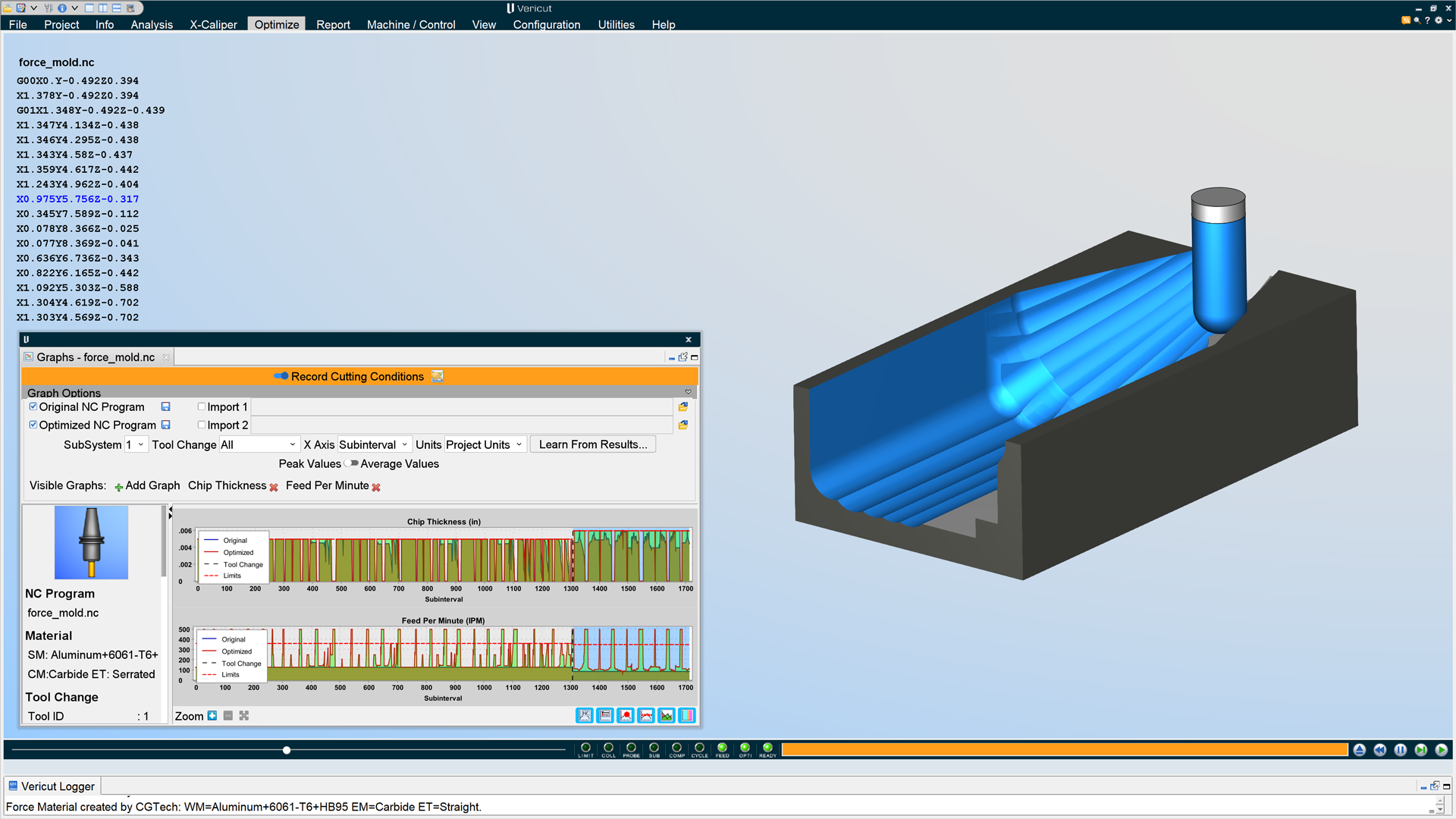
That’s why leading manufacturers around the world trust Vericut CNC simulation software to get it right the first time.
By verifying toolpaths directly from NC code and optimizing machining conditions in advance, Vericut enables shops to deliver molds and dies that are accurate, safe, and production-ready for plastic injection molding and stamping applications.
-1.png?width=64&height=64&name=Brand%20Icons%20-%20light%20(2)-1.png)
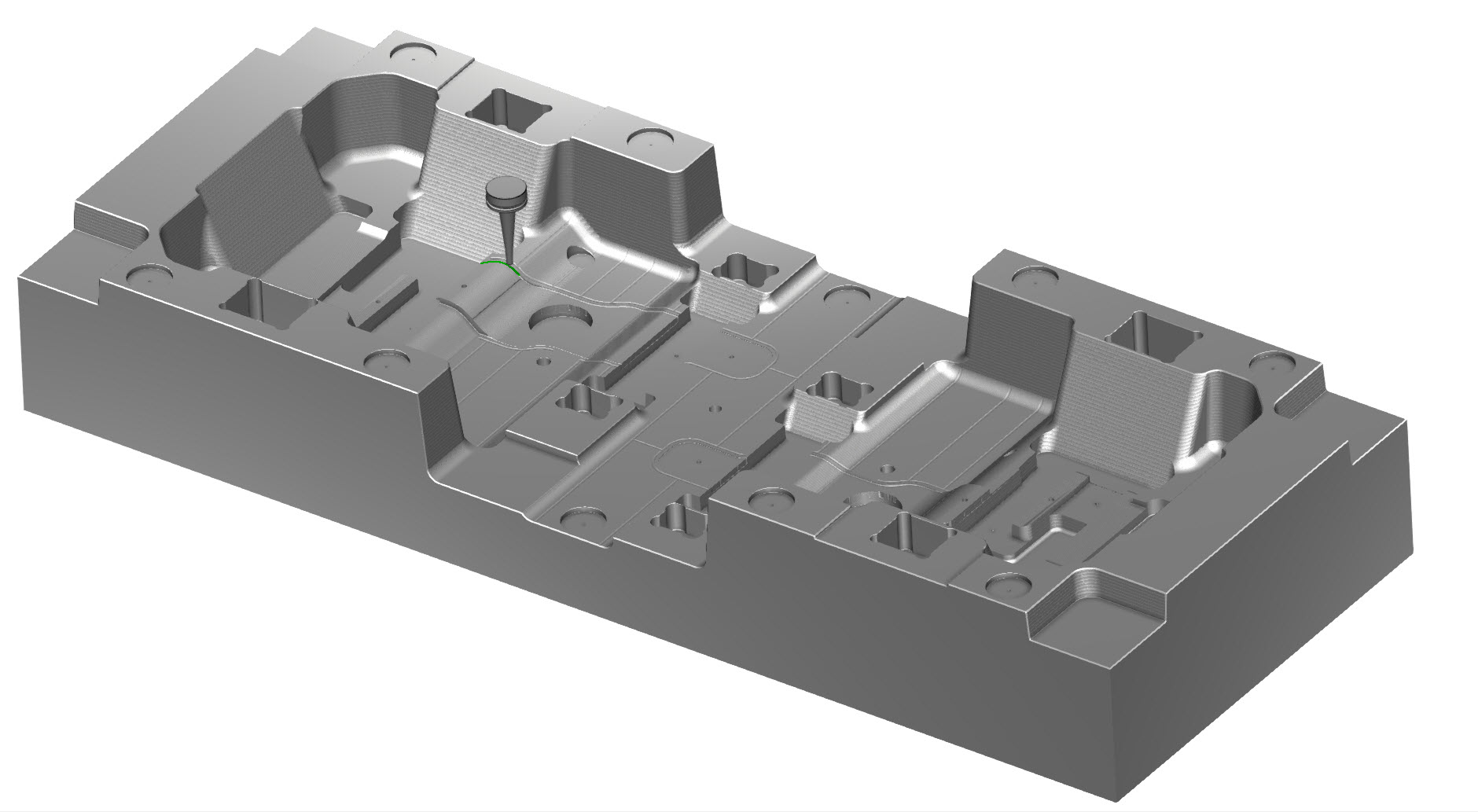
Undercuts, deep cavities, and freeform surfaces typically demand 5-axis or multi-axis CNC machining, creating long and complex toolpaths that are prone to risk.
-1.png?width=64&height=64&name=Brand%20Icons%20-%20light%20(5)-1.png)
Even microns of deviation, or small surface imperfections, can render a mold unusable for use.
-1.png?width=64&height=64&name=Brand%20Icons%20-%20light%20(3)-1.png)
Mold and die components aren’t cheap, and when NC programs fail to meet design intent, costly scrap, wasted electrodes, and tool damage quickly build up.
-1.png?width=64&height=64&name=Brand%20Icons%20-%20light%20(4)-1.png)
With downstream injection molding or stamping lines waiting, delays can soon ripple across entire production schedules.
-2.png?width=330&height=313&name=Content%20(1)-2.png)
-1.png?width=600&height=313&name=Content%20(2)-1.png)


.png?width=50&height=60&name=shield-check--shield-protection-security-defend-crime-war-cover-check%20(1).png)
.png?width=60&height=60&name=Brand%20Icons%20-%20light%20(6).png)
-1.png?width=900&height=470&name=Content%20(3)-1.png)
-1.png?width=495&height=470&name=Content%20(4)-1.png)
Many molds require Electrical Discharge Machining (EDM) to finish features unreachable by cutting tools. However, producing and validating electrodes adds cost, complexity, and delivery risk.
Vericut’s Die Sinking EDM simulation closes this gap by validating electrode geometry, checking gouges or remaining material, and ensuring accuracy across every electrode at once.
This is critical because some molds require more than 100 electrodes, meaning manually checking each isn’t just inefficient - it’s error-prone.
With Vericut, shops reduce unnecessary electrodes, cut costs, and deliver molds faster to injection molders who depend on them.
-1.png?width=698&height=465&name=Media%20(1)-1.png)
A high-quality mold sets the standard for thousands of products. That means manufacturers must be certain that each and every mold is built on validated, optimized, and production-ready machining processes.
That’s why the likes of Miju Precision, Imflux, MI Integration, Changyoung Precision, and LG Electronics, trust Vericut to deliver safer machining and better molds.
And because every mold ultimately drives high-volume production — whether in automotive, medical, or other essential markets — Vericut’s role goes far beyond the machine shop floor.
By enabling defect-free, optimized molds, it safeguards the efficiency, quality, and reliability of the entire injection molding operations.

See how Vericut CNC simulation software can help your business forgo its CNC machining frustrations.
Address:
Vericut USA
CGTech Corporate Headquarters
9000 Research Drive
Irvine, California
92618-4214
Phone:
(949) 753-1050


 English - United Kingdom
 English - Singapore
 日本語 - 日本
 한국어 - 대한민국