

 English - United Kingdom
 English - United States
 Italiano - Italia
 日本語 - 日本
 한국어 - 대한민국
 Svenska – Sverige

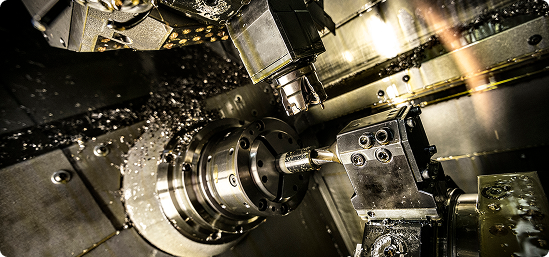
Multi-axis machining has reshaped modern manufacturing, enabling machine shops worldwide to produce complex geometries in fewer steps, improved accuracy and efficiency.
However, greater capability also introduces greater complexity. Even experienced programmers may encounter issues that result in scrapped parts, damaged tooling, machine downtime, and costly production delays.
In this blog, we explore the top seven programming mistakes in multi-axis machining and share how Vericut simulation and verification can help you to eliminate risk before cutting begins.
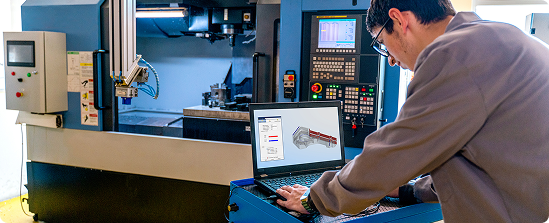
What is Multi-Axis Machining?
Multi-axis machining refers to CNC processes where the cutting tool or workpiece can move along more than the standard three linear axes (X, Y, and Z).
By incorporating one or more rotary axes (A, B, or C), manufacturers gain the ability to machine complex shapes, compound angles, and freeform surfaces in fewer setups, often within a single continuous machining cycle.
Industries such as aerospace, medical manufacturing, and precision engineering rely on multi-axis machining to achieve part geometries and tolerances that are difficult or impossible with traditional methods.
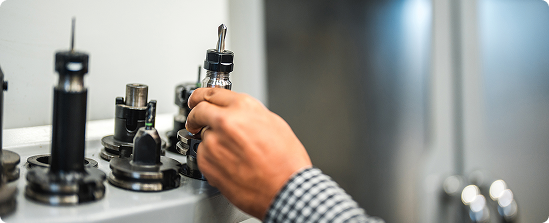
How Does Multi-Axis CNC Machining Work?
In a multi-axis machining environment, the CNC controller synchronizes movement across both linear and rotary axes simultaneously.
Achieving accurate results depends on several critical factors such as sophisticated CAD/CAM programming strategies, accurate and machine-specific post-processing, and a thorough understanding of machine kinematics and controller behaviour.
As more axes are introduced, programming complexity increases, along with the risk of collisions, axis overtravel, and tool orientation errors.
What are the Main Types of Multi-Axis Machining?
3-Axis CNC Machining
3-Axis machining is the basic setup with motion along X, Y, and Z axes only. Best suited for simple, prismatic parts, but limited capacity for undercuts or complex surface geometry.
4-Axis CNC Machining
4-Axis machining is the basic X, Y, Z axes setup with addition of a rotary axis for part rotation. This allows access to multiple sides without re-clamping or multi-setup. This is commonly used for continuous “around-the-part” machining.
5-Axis CNC Machining
5-Axis machining supports indexed (3+2) or fully simultaneous motion, ideal for complex geometries, deep cavities, and tight tolerances. This requires advanced CAM strategies and highly accurate post-processing.
6-Axis CNC Machining
6-Axis machining delivers maximum flexibility and complexity geometries, often applied in automation, hybrid manufacturing (additive and subtractive machining), or extreme contouring profile. This demands precise machine models, advanced CAM systems and post-processor.
What are the Benefits of Multi-Axis Machining?
Reduced Setups
Saves time, minimizes handling errors, and prolong tool life.
Higher Accuracy
Machine complex features in a single machining cycle.
Shorter Lead Times
Improve productivity and stay competitive.
Improved Surface Quality
Reduces the need for secondary process finishing operations.
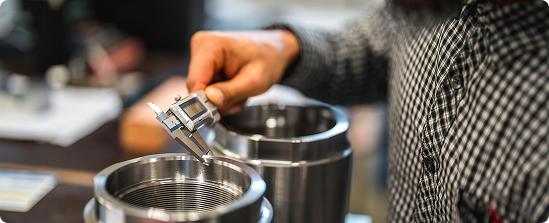
The Top 7 Programming Mistakes in Multi-Axis Machining.
While multi-axis machining offers powerful advantages, it also presents more opportunities for costly mistakes.
Coordinating multiple axes, managing tool orientation, and accounting for real machine behavior require absolute precision. Fortunately, these common errors are well understood and can be avoided with proper verification using Vericut.
1. Incorrect Post-Processor Configuration
The post-processor converts CAM output into machine-readable G-code, making it a critical link to the workflow.
If the post does not accurately represent machine kinematics, rotary directions, or axis limits, even a flawless CAM toolpath can produce unsafe or inefficient machine motion.
Potential issues includes:
- Unexpected collisions
- Gouges and excesses
- Inefficient or unstable axis motion
How Vericut helps:
Vericut simulates the actual post-processed G-code, confirming that NC programs behave exactly as expected on the specific machine tool.
2. Inadequate Machine Simulation
Many CAM systems provide basic simulation, but these simulations often overlook controller behaviour, axis acceleration limits, and real machine kinematics.
As a result, subtle errors may remain hidden until the NC program reaches the shop floor,
How Vericut helps:
Vericut creates a true digital twin of the machine, controller, tooling, and setup that allows detecting collisions, overtravel, axis synchronization issues before machining begins.
3. Inadequate Tool Orientation
In multi-axis machining, small deviations in tool tilt, lead, or lag angles can negatively affect surface finish, tool life, and cutting stability.
Abrupt orientation changes may also cause gouges or surface defects.
How Vericut helps:
Vericut accurately simulates full multi-axis motion, allowing programmers to refine tool orientation and ensure smooth, stable transitions throughout the toolpath.
4. Overlooking Machine Travel Limits
All multi-axis machines have physical travel limits and kinematic singularities where motion can become unstable or unpredictable.
Ignoring these travel limits can result in axis wind-up, unexpected rotation, jerky movement that puts tools and parts at risk.
How Vericut helps:
Vericut visually identifies travel limit violations and singularity risks, enabling corrective adjustments before running the program on the machine.
5. Incorrect Coordinate System or Work Offsets
An incorrect coordinate system or work offset can instantly scrap a part, even if the toolpath itself is correct.
These errors often happen when inputting the incorrect data on fixture offsets, probing routines or setup misalignment.
How Vericut helps:
Vericut verifies the complete part setup, including fixtures, work offsets, and probing routines, ensuring the coordinate system aligns with both the CAD model and machine configuration.
6. Unoptimized Toolpaths
Multi-axis toolpaths frequently include excessive linear moves or sudden change in feed rate that can:
- Increase tool wear
- Reduce machining efficiency
- Produce inconsistent surface finishes
How Vericut helps:
Vericut optimization analyzes actual material removal and automatically optimizes feed rates for smoother motion, consistent cutting forces, and longer tool life.
7. Unsuitable Tool and Holder Selection
Even with a correct program, unsuitable tool assemblies can cause clearance problems or collisions, especially in tight multi-axis operations.
If a tool holder is too long or inaccurate tool models often reveal issues only during actual machining.
How Vericut helps:
Vericut Tool Manager enables users to validate the complete tool and holder assemblies with full collision detection, allowing problems to be resolved virtually before sending them to the shop floor.
Why Multi-Axis Machine Simulation with Vericut Matters.
In today’s advanced CNC manufacturing environment, errors in multi-axis programming are not just inconvenient; they can be expensive and disruptive.
As part complexity grows, and tolerances and delivery timelines tighten, manufacturers need complete confidence that machining programs will perform as intended.
Vericut provides that assurance by verifying programs directly at the G-code level, bridging the gap between CAM output and real-world machining.
Trusted by manufacturers across aerospace, automotive, medical devices, and industrial engineering, Vericut helps teams:
- Prevent machine crashes, scrap, and unplanned downtime
- Validate true machine kinematics against actual machine movements
- Improve toolpath efficiency, speed, and reliability
- Safety adopt complex multi-axis and automated machining processes
Discover Vericut Multi-Axis Simulation today.
Multi-axis machining delivers exceptional capability but only when programs are thoroughly validated.
By identifying common programming pitfalls early and verifying G-code with Vericut, manufacturers can reduce risk, improve productivity, and confidently machine even the most demanding parts.
Contact us now to learn more about Vericut’s Multi-Axis CNC Simulation.
.jpg)
-1.jpg)