

 English - United Kingdom
 English - United States
 한국어 - 대한민국

-1.jpg?width=638&height=259&name=Media%20(7)-1.jpg)
In today’s competitive manufacturing environment, CNC machines are expected to cut faster, run longer, and produce higher quality parts than ever before. At the same time, tooling costs continue to rise, and machine downtime remains one of the most expensive disruptions to productivity.
When cutting tools wear prematurely, the impact goes far beyond replacement costs. Excessive wear can increase cycle times, compromise part quality, overload machine components, and accelerate wear on critical systems such as spindles, bearings, and ball screws.
Fortunately, these issues can often be prevented through smarter programming, simulation, and optimization. By understanding the factors that drive tool wear and proactively controlling them, manufacturers can significantly improve tool life, enhance machine reliability, and increase overall machining efficiency.
Why Tool Wear Matters.
Tool wear is rarely caused by a single event. More often, it results from a combination of factors that gradually increase cutting forces, heat generation, vibration and mechanical stress.
As cutting conditions become less stable, inserts and cutting edges wear more quickly, while excessive loads are transferred directly into machine components. Over time, this leads to reduced tool life, increased maintenance requirements, and higher operating costs.
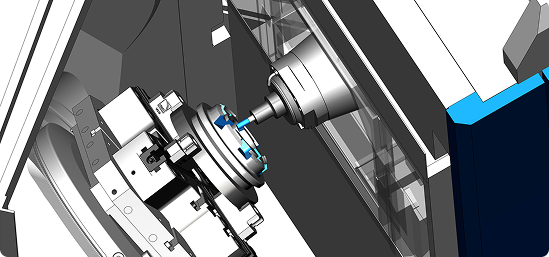
Modern simulation and optimization technologies provide manufacturers with the ability to identify and eliminate these issues before machining begins. Solutions such as Vericut enable users to analyze cutting conditions, validate NC programs, and detect potential force spikes or machine overloads using a digital twin of the actual machine tool.
By understanding what will happen before the first chip is out, manufacturers can prevent costly problems before they occur.
Common Causes of Premature Tool Wear.
-
Feed rates and spindle speeds that do not match actual chip thickness.
-
Sudden changes in tool engagement or material removal rate (MRR).
-
Aggressive entry moves, ramps, plunges, and sharp corners.
-
Inadequate coolant delivery or unstable workholding conditions.
-
Excessive air-cutting and non-productive machine movements.
-
Lack of simulation, leaving collisions, overloads, and force spikes undetected.
.jpg?width=638&height=259&name=Frame%2048095626%20(2).jpg)
Proven Strategies to Reduce Tool Wear.
Extending tool life is not about reducing cutting performance. Instead, it involves maintaining optimal cutting conditions throughout the machining process.
By combining feed rate optimization, accurate simulation, and disciplined maintenance practices, manufacturers can create stable machining environments that produce better results with less wear.
1. Optimize Feed Rates and Cutting Speeds.
The cutting edge responds to actual chip thickness, not simply the programmed feed rate.
As tool engagement changes during machining, chip load can fluctuate significantly. Maintaining a consist chip thickness helps keep cutting force stable and reduces stress on the tool.
Vericut Force Optimization automatically adjusts feed rates throughout the NC program to maintain the limit set for the chip thickness while keeping force and spindle power within safe limits.
2. Verify NC Program Through Simulate.
Full G-code simulation validates the actual program that will run on the machine.
By simulating machine motion, manufacturers can detect collisions, over-travel, unexpected retracts, and post-processor issues before they reach the shop floor.
Eliminating these risks helps protect tooling, prevent machine crashes, and avoid costly downtime.
3. Monitor Tool Engagement and Cutting Forces.
Stable cutting conditions are essential for maximizing tool life.
Vericut Force chart enables programmers to identify areas where cutting loads spike due to excessive engagement or material removal. Once identified, these areas can be corrected through feed rate adjustments or revised toolpath strategies.
Vericut Force provides visual feedback on cutting forces, chip thickness, spindle power, torque, tool deflection, and feed per tooth, helping users make informed process improvements.
4. Use Quality Tooling and Maintain It Properly.
Tool selection plays a critical role in machining performance.
Using the correct tool geometry, coating, and grade for the material being machined helps maximize productivity and tool life. Equally important is replacing tools proactively before excessive wear impacts quality or performance.
Regular calibration of tool lengths, diameters, and machine offsets ensures machining accuracy and reduces unnecessary stress on cutting tools.
5. Minimize Air-Cutting and Non-Productive Motion.
Every unnecessary machine movement consumes time and contributes to mechanical wear.
Optimized toolpaths and G-code programs reduce travel distances, rapid movements, and acceleration-deceleration cycles. This improves throughput while minimizing wear on machine axes, guideways, and the drive systems.
6. Control Heat and Vibration.
Heat and vibration are among the biggest contributors to premature tool failure.
Proper coolant application, rigid workholding, and minimizing tool overhang help maintain stable cutting conditions. When chatter occurs, reducing engagement and optimizing feed rates can significantly improve process stability.
Discover how much productivity and cost savings your shop could unlock with Vericut Force.
Reduced cycle times. Extend tool life. Increase profitability
Use our Force Optimization calculator to estimate your potential savings and productivity gains.
How to Extend CNC Machine Life.
Machine longevity depends on more than routine maintenance.
While regular servicing of spindles, bearings, and lubrication systems remains important, preventing unnecessary mechanical stress is equally critical.
Physics-based force analysis allows manufacturers to identify and eliminate overload conditions before machining begins. Optimized G-code reduces abrupt directional changes, minimizes shock loading, and promotes smoother machine motion.
Combining these practices with balanced tooling, proper setup procedures, and feed rate optimization create a machining process that is gentler on machine components while maintaining high productivity.
How Vericut protects tools and CNC machines.
Vericut acts as a digital safeguard for the entire machining process.
By simulating the actual G-code that controls every machine axis and spindle, Vericut verifies machine motion, identifying collisions, over-travel, and validating machine limits before production begins.
Vericut Force Optimization further enhances process performance by using physics-based calculations to analyze cutting forces, spindle power, and chip thickness throughout the operation.
Based on this analysis, feed rates are automatically optimized to maintain consistent chip thickness and stable cutting conditions, preventing excessive tool loads, vibrations, and spindle overloads.
Manufacturers using Vericut Force Optimization have reported significant improvements in productivity, including cycle time reductions of up to 70% (depending on application), reduced tool wear, and reduced maintenance requirements.
This result is a safer, faster, and more predictable machining process.
.jpg?width=638&height=259&name=Media%20(8).jpg)
Conclusion: Tool life is one of the clearest indicators of machining process stability.
Premature wear is often a symptom of excessive heat, vibration, inconsistent chip thickness, or unverified machine motion. Addressing these factors at the programming stage creates a more stable and efficient manufacturing process.
By maintaining consistent chip thickness, controlling cutting forces, and validating the exact G-code that will run on the machine, manufacturers can maximize tool performance while protecting valuable machine assets.
Vericut CNC Verification and Vericut Force Optimization help transform tool management from a reactive maintenance task into a proactive production strategy.
The result is longer=lasting tools, improved machine reliability, reduced operating costs, and greater confidence in every machining operation.
Because when tool life improves, productivity follows.
.jpg)